
by Michael Frickey | May 28, 2025 | Personal Injury
Why Finding the Right Compensation Attorney Matters
A compensation attorney specializes in helping injured workers steer the complex workers’ compensation system to secure medical benefits, wage replacement, and disability payments after workplace injuries.
Quick Answer – What You Need to Know:
• Role: Handle claim filing, negotiate with insurers, represent you at hearings
• Cost: Work on contingency (typically 15% in most states, no upfront fees)
• When to Hire: Immediately after serious injury, denied claims, or employer retaliation
• Benefits: Medical coverage, 2/3 wage replacement, permanent disability awards
• Timeline: 30 days to report injury, 2 years to file claim in most states
Getting hurt at work is traumatic enough. Don’t get hurt twice by trying to handle your workers’ compensation claim alone while insurance companies use every tactic to minimize your payout.
According to the Bureau of Labor Statistics, close to 139,000 workplace injuries and illnesses occurred in New York alone in 2022. Yet many injured workers struggle to receive fair compensation because they don’t understand their rights or the complex legal system designed to protect them.
The stakes are high. Insurance companies have teams of lawyers fighting to reduce your benefits. Meanwhile, you’re dealing with medical bills, lost wages, and an uncertain future. One wrong move – like missing a deadline, choosing the wrong doctor, or accepting a lowball settlement – can cost you thousands of dollars in benefits you rightfully deserve.
As Michael Frickey, an award-winning trial attorney and Board Certified Specialist, I’ve seen too many injured workers get shortchanged because they didn’t have proper legal representation when dealing with compensation attorney matters. My experience defending clients in serious legal challenges has shown me how critical it is to have an experienced advocate fighting for your rights from day one.
Why You’re Here
You’re here because you understand that trust matters when your livelihood is on the line. You want maximum benefits for your workplace injury, and you want to avoid getting hurt a second time by the very system designed to protect you. That’s exactly what we’ll help you achieve.
What Does a Compensation Attorney Do?
Think of a compensation attorney as your personal guide through the maze of workers’ compensation law. When you’re hurt at work, you’re not just dealing with physical pain – you’re entering a complex legal system that can feel overwhelming when you’re trying to heal.
The good news? Workers’ compensation operates as a no-fault insurance program. This means you can receive benefits regardless of who caused your workplace accident. Whether you slipped on a wet floor, got hurt by faulty equipment, or were injured in any other work-related incident, you’re protected.
Here’s what the system is designed to provide: medical coverage for all reasonable and necessary treatment, wage replacement typically equal to two-thirds of your average weekly earnings, permanent disability awards for lasting impairments, vocational rehabilitation to help you return to work, and death benefits for families of workers who lose their lives on the job.
The reality is sobering. According to scientific research on workplace injuries, slips, trips, and falls account for 18% of all workplace injuries that require employees to take days off work. Even more concerning, over 80 workers lost their lives in fatal on-the-job injuries in New York City alone in 2022.
These numbers aren’t just statistics – they represent real people with families, dreams, and futures that got derailed by workplace accidents.
Key Roles of a Compensation Attorney
Your compensation attorney wears many hats, and each role is crucial to protecting your interests.
Investigation and documentation forms the foundation of your case. We dig deep into what happened, gathering witness statements, reviewing safety records, and compiling every piece of medical evidence. Insurance companies love to question whether your injury is really work-related, so having rock-solid documentation isn’t optional – it’s essential.
Handling insurer communication might be the most valuable service we provide. Insurance adjusters are professionally trained to minimize payouts. They know exactly what questions to ask and how to phrase them to get you to say something that could hurt your claim later. We become your voice, handling every conversation so you can focus on getting better.
When it comes to hearing representation, you definitely don’t want to go it alone. If your case goes before a Workers’ Compensation Law Judge, having experienced legal representation can make the difference between getting the benefits you deserve and walking away empty-handed.
Claims management keeps everything running smoothly behind the scenes. We make sure all forms are filed correctly and on time, coordinate with your medical providers, and constantly track your benefits to ensure you receive everything you’re entitled to. Missing one deadline or filing one form incorrectly can derail your entire claim.
Compensation Attorney vs. Personal Injury Lawyer
Here’s where things get interesting, and a bit confusing for most people. There’s an important legal distinction between workers’ compensation and personal injury law that affects your options.
Under something called the exclusive remedy rule, you generally cannot sue your employer for negligence if you’re injured at work. Workers’ compensation becomes your exclusive remedy against your employer. It’s a trade-off – you get guaranteed benefits regardless of fault, but you give up the right to sue for additional damages like pain and suffering.
But here’s the key: you might still have third-party claims against other parties. These could include equipment manufacturers if defective machinery caused your injury, property owners if you were hurt at another location, contractors or subcontractors working at your site, or vehicle drivers if you were injured in a work-related car accident.
These third-party cases can provide additional compensation for pain and suffering, which isn’t available through workers’ compensation alone. A skilled compensation attorney knows how to spot these opportunities and coordinate both claims to maximize your total recovery.
The bottom line? While the workers’ compensation system provides crucial protection, having an experienced attorney ensures you don’t miss out on any benefits or additional compensation you might be entitled to receive.
Why and When to Hire a Compensation Attorney
The moment you get hurt at work, the clock starts ticking. Timing matters more than you might think when it comes to protecting your rights and securing the benefits you deserve.
Here’s the reality: insurance companies have entire teams working around the clock to minimize what they pay out. Meanwhile, you’re dealing with pain, medical appointments, and the stress of lost income. The sooner you get a compensation attorney on your side, the better your chances of getting fair treatment.
The critical first 30 days can make or break your case. You must notify your employer within this window, and how you handle these early steps often determines whether your claim succeeds or gets denied. This isn’t the time to “wait and see” – it’s the time to act decisively.
Denied claims are unfortunately common, but they’re not the end of the road. Insurance companies sometimes deny perfectly valid claims, hoping injured workers will simply give up. With proper legal representation, many of these denials can be overturned. The key is acting quickly, since you have limited time to appeal.
When you’re facing permanent disability, the stakes get even higher. The calculation of Scheduled Loss-of-Use (SLU) awards and nonscheduled benefits becomes incredibly complex. These calculations can literally determine your financial future, so getting them right matters enormously.
Employer retaliation is illegal, but it still happens. If you notice harassment, sudden schedule changes, or threats after filing your claim, you need legal protection immediately. Don’t let fear of losing your job prevent you from getting the medical care and benefits you’re entitled to.
For comprehensive information about how we handle these situations, check out our Workers’ Compensation Lawyer services page.
Timing Your Hire—Compensation Attorney Checklist
Getting organized in those first crucial days can save you months of headaches later. Here’s what needs to happen right away:
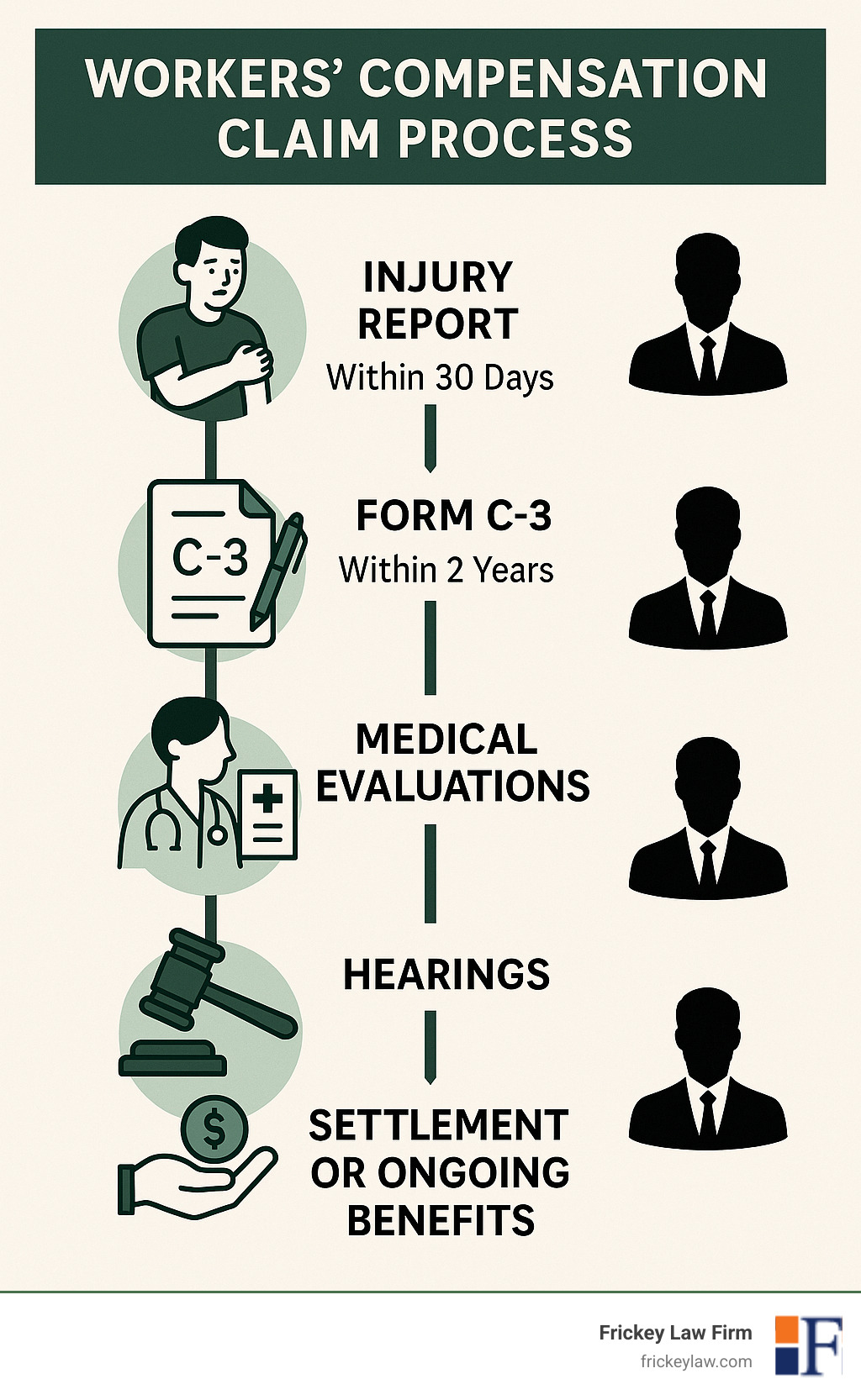
Report your injury to your supervisor in writing within 30 days. Don’t rely on verbal reports – put it in writing and keep a copy for your records. This written notice protects you if there’s ever a dispute about when the injury was reported.
Get proper medical attention and make sure your healthcare provider documents that your injury is work-related. This medical record becomes crucial evidence later, so don’t assume the connection is obvious to everyone.
Start gathering your medical records immediately. Keep copies of everything – doctor’s notes, test results, treatment plans, and bills. You’ll need these throughout the process, and having them organized from the start makes everything smoother.
File Form C-3 with the Workers’ Compensation Board within two years. This Employee Claim Form officially starts your case, but waiting until the deadline approaches is risky. File as soon as you understand the extent of your injuries.
Schedule a free consultation with a compensation attorney before making any statements to insurance companies. What you say in those early conversations can impact your entire case, so get professional guidance first.
Red Flags Telling You It’s Time
Some warning signs mean you need legal help immediately – don’t ignore these red flags:
Missed or stopped payments without explanation often signal that the insurance company is looking for ways to terminate your benefits. They’re hoping you won’t notice or won’t fight back. A compensation attorney can quickly get to the bottom of what’s happening and get your payments restored.
Disputes over Independent Medical Examinations create serious problems. When the insurance company’s doctor says you’re fine but your treating physician disagrees, you’re caught in the middle of a medical dispute that can derail your entire claim. Legal intervention becomes essential to resolve these conflicts.
Lowball settlement offers early in your case are almost always inadequate. These offers typically ignore future medical needs and underestimate the full extent of your disability. Insurance companies hope you’ll take quick money rather than fight for what you actually deserve.
Any form of workplace retaliation requires immediate legal attention. Whether it’s subtle harassment or outright threats, these actions violate your rights and can escalate quickly without proper intervention.
The bottom line? Don’t wait until problems develop to seek legal help. Early involvement of a skilled compensation attorney prevents many issues from arising in the first place and ensures you’re positioned for the best possible outcome from day one.
Workers’ Compensation Claim Process: Step-by-Step Guide

Navigating the workers’ compensation system can feel overwhelming when you’re already dealing with pain and recovery. But understanding each step helps you protect your rights and avoid costly mistakes that could jeopardize your benefits.
Think of the workers’ compensation process as a series of important checkpoints. Missing even one can derail your entire claim. That’s why having a compensation attorney guide you through each step makes such a difference in the outcome of your case.
The journey starts the moment you get hurt. Your first step is to notify your employer within 30 days – and this must be in writing. Don’t just tell your supervisor verbally. Write down exactly what happened, including the date, time, location, and how your injury occurred. Keep a copy for yourself because this documentation becomes crucial later.
Next comes filing Form C-3, the Employee Claim Form that officially starts your workers’ compensation claim with the Workers’ Compensation Board. You have two years from your injury date to file this form, but don’t wait. The sooner you file, the sooner your benefits can begin.
Your doctor plays a vital role by filing a CMS-1500 preliminary medical report. This document establishes the work-related nature of your injury and outlines your treatment needs. Insurance companies scrutinize this report carefully, looking for any reason to question whether your injury is truly work-related.
At some point, the insurance company will likely require you to attend an Independent Medical Examination (IME). Despite the name “independent,” remember that the insurance company chooses and pays this doctor. The IME helps determine your maximum medical improvement and disability rating – decisions that directly impact your benefits.
If disputes arise about your claim, your case may go to hearings before a Workers’ Compensation Law Judge. This is where having experienced legal representation becomes absolutely critical. The hearing process has strict rules and procedures that can trip up unrepresented claimants.
Finally, if your initial claim gets denied or you disagree with a decision, you’ll need to steer the appeals process. Each level has tight deadlines that can’t be missed without losing your rights entirely.
Filing Form C-3 and Meeting Deadlines
The 30-day notice requirement and two-year statute of limitations aren’t suggestions – they’re absolute deadlines that can make or break your case. Miss the 30-day notification window, and you might lose your right to benefits entirely. Wait too long to file your Form C-3, and your claim gets dismissed regardless of how severe your injury is.
Many states now offer electronic filing options, which can speed up the process. But don’t let the convenience fool you into thinking these forms are simple. The Workers’ Compensation Board reviews every detail, and insurance companies look for any inconsistency or error they can use to deny your claim.
A compensation attorney ensures your forms are completed accurately the first time. We know exactly what information the board needs and how to present your case in the strongest possible light. Small mistakes on these forms can create big problems down the road.
Independent Medical Examination (IME) Explained
The IME often becomes a battleground in workers’ compensation cases. While the insurer-selected doctor is supposed to provide an objective medical opinion, the reality is more complicated. These doctors know who pays their fees, and that can influence their findings.
The IME doctor will evaluate whether you’ve reached Maximum Medical Improvement (MMI) – the point where your condition has stabilized and further treatment won’t significantly help. This determination affects whether you continue receiving medical benefits and how much permanent disability compensation you might receive.
Medical disputes frequently arise when your treating physician disagrees with the IME doctor’s findings. Your treating doctor knows your case history and has followed your progress over time. The IME doctor sees you once for a brief examination. Yet insurance companies often give more weight to the IME opinion because it typically favors their position.
Your compensation attorney can prepare you for what to expect during the IME, review the doctor’s report for inaccuracies, and challenge biased findings. We may also arrange for an independent evaluation by a qualified physician of our choosing to counter unfavorable IME results.
Appealing a Denied Claim with a Compensation Attorney
Getting a denial notice feels like a punch to the gut, especially when you’re already struggling with medical bills and lost wages. But a denial isn’t the end of your case – it’s often just the beginning of the fight for your rightful benefits.
You have exactly 30 days to file a Request for Further Action (RFA-1) after receiving a denial. This strict deadline starts the formal appeals process, and missing it means losing your right to challenge the decision.
The Workers’ Compensation Appeal Board reviews cases that go through the initial hearing process. If you’re still not satisfied with the outcome, you may have options for further appeal to state court. Each level has its own procedural requirements and deadlines that must be followed precisely.
Statistics consistently show that represented claimants achieve better outcomes at hearings and receive higher awards than those who try to handle appeals themselves. Insurance companies bring experienced attorneys to these hearings. You should too.
For detailed information about starting an appeal, you can request an appeal through the Workers’ Compensation Board. But before you steer this complex process alone, consider how much more effective your appeal could be with skilled legal representation fighting for your rights.
Costs, Fees, and Potential Benefits
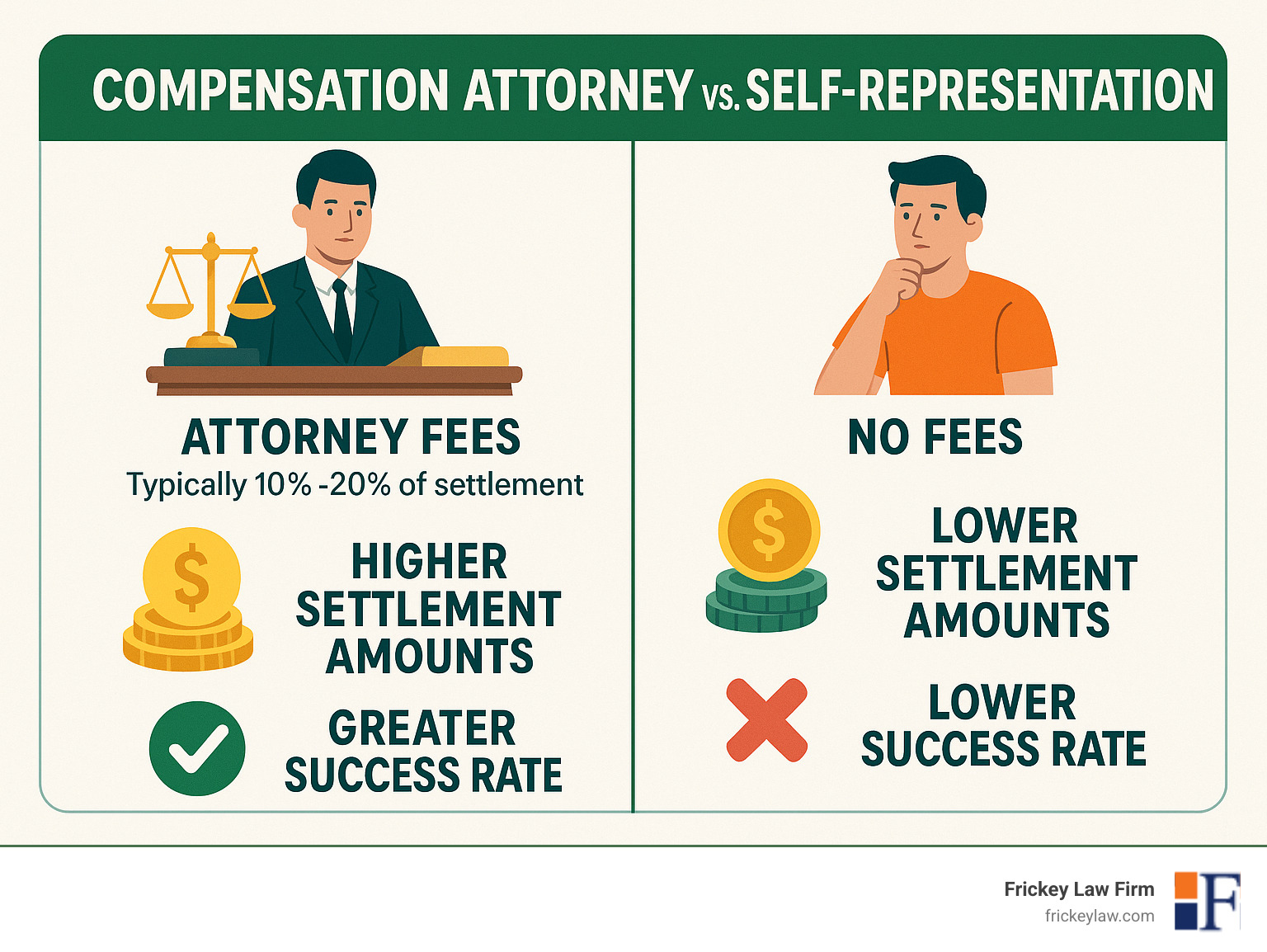
Here’s the truth about hiring a compensation attorney: you won’t pay a penny unless we win your case. That’s right – no upfront fees, no hourly charges, and no surprise bills while you’re already dealing with medical expenses and lost wages.
This arrangement exists because lawmakers recognized that injured workers shouldn’t have to choose between getting legal help and paying their bills. The contingency fee system levels the playing field, giving you access to experienced legal representation when you need it most.
You pay nothing upfront for attorney fees, court costs, or expert witness fees. We invest our time and resources into your case because we believe in it. If we don’t recover benefits for you, you don’t owe us attorney fees.
The potential benefits available through workers’ compensation are substantial. Medical coverage includes all reasonable and necessary treatment related to your workplace injury – from emergency room visits to surgery to ongoing physical therapy. Wage replacement provides up to two-thirds of your average weekly earnings while you recover.
Permanent disability awards can be life-changing, especially for serious injuries. These awards recognize that some workplace injuries cause lasting impairments that affect your ability to earn a living. Vocational rehabilitation helps you retrain for new work if you can’t return to your previous job. For families who lose a loved one in a workplace accident, death benefits provide crucial financial support during an unimaginable time.
Contingency Fees for a Compensation Attorney
Workers’ compensation attorney fees are strictly regulated by the Workers’ Compensation Board. This regulation protects you from excessive fees while ensuring you can access quality legal representation.
The board must approve all attorney fees, and the percentage is typically around fifteen percent of your recovery. But here’s what many people don’t realize: you often pay fees only on the additional benefits we secure for you above what the insurance company was already paying voluntarily.
This means if the insurance company was offering you a settlement, and we negotiate a higher amount, you typically pay the fee only on that additional recovery. The board’s oversight ensures these fees remain reasonable while giving attorneys an incentive to fight hard for maximum benefits.
Calculating Your Weekly Benefits
Understanding how your weekly benefits are calculated helps you see the true value of proper legal representation. The formula is straightforward: your average weekly wage multiplied by two-thirds, then adjusted for your disability percentage.
Temporary total disability means you can’t work at all due to your injury. In this case, you receive two-thirds of your average weekly wage up to your state’s maximum rate. Temporary partial disability applies when you can work but earn less than before your injury – you receive two-thirds of the difference between your pre-injury wages and current earnings.
Permanent partial disability is where things get complex. For specific body parts like fingers or arms, you may receive scheduled loss-of-use awards with predetermined week values. For injuries affecting your overall earning capacity, nonscheduled awards are calculated based on how the injury impacts your ability to work.
These benefits are completely tax-free at both state and federal levels, which can make them worth significantly more than regular wages. For current benefit rates in your state, check the weekly benefits information from your Workers’ Compensation Board.
The difference between handling your case alone versus having experienced legal representation often amounts to thousands of dollars in additional benefits. Insurance companies know that unrepresented claimants typically accept lower settlements and receive smaller awards. A skilled compensation attorney ensures you receive every dollar you’re entitled to under the law.
Common Mistakes and How to Avoid Them

I’ve seen too many good people lose thousands of dollars in benefits because they made simple mistakes early in their workers’ compensation claims. The insurance companies know these common errors, and they’re counting on you to make them.
The truth is, most of these mistakes happen because injured workers don’t know what they don’t know. You’re dealing with pain, medical appointments, and lost wages while trying to steer a complex legal system designed by lawyers and insurance companies.
Here’s what trips up most people: late reporting of their injury to their employer, filing wrong or incomplete forms, seeing only employer-approved doctors, posting the wrong things on social media, and accepting the first settlement offer without understanding what they’re giving up.
These aren’t just minor slip-ups. Each one can cost you serious money or even destroy your entire claim. But here’s the good news – they’re all completely preventable when you know what to watch for.
Missing Deadlines
Time limits in workers’ compensation cases aren’t suggestions – they’re absolute deadlines that can make or break your claim. I’ve had to deliver heartbreaking news to injured workers who lost everything because they missed a deadline by just a few days.
The 30-day reporting rule is your first critical deadline. You must notify your employer in writing within 30 days of your injury. “I told my supervisor” isn’t enough – it needs to be documented. While you might still be able to file a claim after 30 days, late reporting gives the insurance company a powerful weapon to deny your benefits.
The two-year statute of limitations is even more serious. Miss this deadline, and your claim is dead in the water. Courts almost never make exceptions, even if you have the most heartbreaking story or the most obvious work injury. I’ve seen people with career-ending injuries lose their right to any compensation because they waited too long to file their paperwork.
Insurance companies know about these deadlines, and they’re not going to remind you. In fact, they’re hoping you’ll forget. Having a compensation attorney from the start means these critical dates are being tracked and protected.
Choosing the Wrong Doctor
Your choice of doctors can make or break your workers’ compensation claim. Many injured workers make the mistake of only seeing company-approved doctors, thinking they have no other options. This approach can seriously limit your treatment and hurt your claim.
While you may be required to see certain company doctors for evaluations, you have important rights that most people don’t know about. You can seek emergency treatment from any doctor when you’re hurt. You’re entitled to second opinions from independent doctors. And you should receive specialist referrals when your injury requires specialized care.
Gaps in your medical treatment are like blood in the water for insurance companies. They’ll argue that if you were really hurt, you would have seen doctors consistently. If you can’t afford treatment or your claim is being disputed, talk to a compensation attorney about getting the medical care you need while protecting your claim.
Some injured workers avoid going to doctors because they’re worried about medical bills. Don’t let this fear hurt your health or your claim. Workers’ compensation should cover your reasonable medical treatment, and we can help ensure you get the care you need.
Settling Too Soon
The biggest mistake I see injured workers make is accepting settlement offers before they understand what they’re giving up. Insurance companies love to make quick settlement offers to injured workers, especially those who don’t have legal representation.
These early offers might seem attractive when you’re worried about bills and lost wages. But here’s what the insurance company isn’t telling you: settlements usually mean giving up your rights to future medical care and waiving your right to reopen your claim if your condition gets worse.
Your future medical needs could be significant. Your injury might require ongoing physical therapy, future surgeries, or expensive medications for years to come. Once you settle, you’re paying for all of this out of your own pocket.
You shouldn’t even consider settlement until you’ve reached Maximum Medical Improvement – the point where your condition has stabilized and doctors can accurately assess your permanent limitations. Settling before this point is like selling your house before you know what it’s worth.
Settlement agreements typically include broad waivers that prevent you from seeking additional benefits later, even if your condition deteriorates or you find related injuries. These waivers are written by insurance company lawyers to protect their interests, not yours.
You only get one shot at this. There are no do-overs in workers’ compensation settlements. Having an experienced compensation attorney review any settlement offer ensures you understand exactly what you’re agreeing to and whether it’s fair given your specific situation.
Frequently Asked Questions about Compensation Attorneys
The world of workers’ compensation can feel overwhelming when you’re already dealing with an injury. Let me answer the most common questions we hear from injured workers who are considering whether to hire a compensation attorney.
What does it cost to hire a compensation attorney?
Here’s the good news: hiring a compensation attorney won’t cost you anything upfront. We work on what’s called a contingency fee basis, which means you don’t pay us unless we win your case.
The Workers’ Compensation Board sets our fees to protect injured workers from excessive costs. These board-approved fees ensure you get quality legal representation without worrying about hourly bills piling up while you’re already struggling with medical expenses and lost wages.
Think of it this way: we only succeed when you succeed. This arrangement motivates us to fight as hard as possible for your benefits because our payment depends on getting you the best possible outcome.
The increased benefits we typically secure for our clients far exceed the attorney fees. Many injured workers find they actually come out ahead financially, even after paying attorney fees, because we know how to maximize their claims in ways they couldn’t achieve on their own.
Can I be fired for filing a workers’ comp claim?
Absolutely not. Employer retaliation for filing a legitimate workers’ compensation claim is illegal, and we take these violations very seriously.
Unfortunately, some employers still try to punish workers who file claims. They might terminate you, create a hostile work environment, demote you, or suddenly reduce your hours. None of this is legal, and you have strong protections under the law.
Retaliation laws specifically protect you from these unfair practices. Additionally, if your injury results in a disability, the Americans with Disabilities Act (ADA) may provide extra protection by requiring your employer to make reasonable accommodations for your condition.
If you’re facing any form of retaliation, start documenting everything immediately. Keep records of conversations, emails, schedule changes, or any other negative actions your employer takes after you file your claim.
Contact a compensation attorney right away if you suspect retaliation. We can pursue separate legal action for the retaliation while simultaneously protecting your workers’ compensation benefits. You shouldn’t have to choose between your job and your health.
Can I sue a third party while receiving workers’ comp?
Yes, and this is one area where having an experienced compensation attorney really pays off. While you generally can’t sue your employer directly due to the exclusive remedy rule, you may have valid claims against other parties whose negligence contributed to your injury.
Third-party claims open up additional avenues for compensation that go beyond what workers’ compensation provides. These cases can include product liability lawsuits against equipment manufacturers who made defective machinery, premises liability claims against property owners where you were injured, motor vehicle accident cases if your injury happened during work-related driving, or contractor negligence claims at construction sites.
What makes third-party cases valuable is that they can provide compensation for pain and suffering, full wage loss, and other damages that aren’t available through the workers’ compensation system. These recoveries can be substantial and life-changing.
However, navigating both a workers’ compensation claim and a third-party lawsuit simultaneously requires careful coordination. Your workers’ compensation carrier may have a lien on any third-party recovery, which means they could be entitled to reimbursement for benefits they’ve paid you.
We handle this coordination seamlessly, ensuring both claims work together to maximize your total recovery rather than working against each other. The key is identifying these third-party opportunities early and pursuing them strategically alongside your workers’ compensation benefits.
Conclusion
You’ve been through enough. Getting injured at work shouldn’t mean fighting a second battle against insurance companies trying to shortchange you on the benefits you rightfully deserve.
The truth is, the workers’ compensation system wasn’t designed to be fair to injured workers. Insurance companies have entire legal teams whose job is to find ways to pay you less. Meanwhile, you’re dealing with medical appointments, lost wages, and an uncertain future.
That’s where a skilled compensation attorney makes all the difference. We level the playing field and make sure you get every dollar you’re entitled to under the law.
At Frickey Law Firm, we understand what you’re going through. Our board-certified expertise and award-winning service isn’t just about legal credentials – it’s about real people getting real results when they need it most. Our strong track record in complex cases means we know exactly how to steer the system and fight for maximum recovery.
Time is running out. Every day you wait is another day insurance companies can use against you. The 30-day reporting deadline, the two-year filing window, the medical evaluations – these critical steps can’t be undone if they’re handled wrong.
But here’s the good news: you don’t have to figure this out alone. We handle everything while you focus on what matters most – getting better.
Don’t let insurance companies take advantage of you during one of the most difficult times in your life. You deserve an advocate who will fight as hard for your family’s financial security as you’ve worked to provide for them.
Contact Frickey Law Firm today for a free consultation. There’s no cost to talk, no obligation to hire us, and no upfront fees if you decide to move forward. We only get paid when you get paid.
For more information about how we can help with your specific situation, visit our Workers’ Compensation Lawyer services page.
Your recovery is our priority. Let us handle the legal fight while you focus on healing. You’ve already been hurt once – don’t let it happen again.
by Michael Frickey | May 22, 2025 | Traffic Lawyer
The Real Cost of Running a Red Light: What You Need to Know
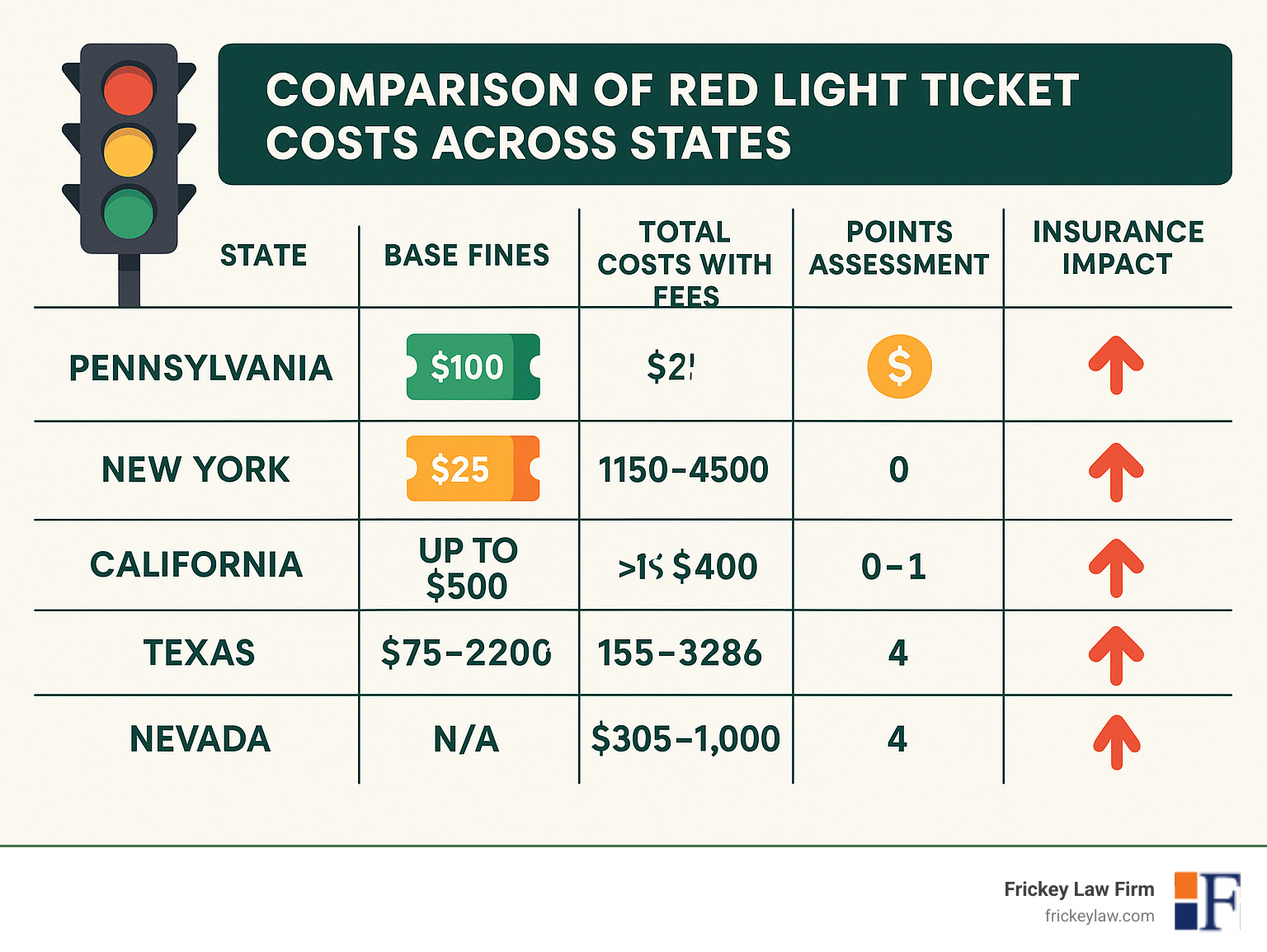
How much is a red light ticket varies significantly depending on your state and whether it was issued by a camera or an officer. Here’s a quick breakdown:
| State |
Camera Ticket |
Officer Ticket |
Points |
| Pennsylvania |
$100 |
$25 + court costs |
0 for camera, 3 for officer |
| New York |
$50 |
$150-$450 |
0 for camera, 3 for officer |
| California |
Up to $500 |
$100 + fees (over $400) |
0-1 depending on type |
| Texas |
$75-$200 |
$155-$286 |
Varies by city |
| Nevada |
N/A |
$305-$1,000 |
4 points |
Running a red light isn’t just dangerous—it can be expensive. Those flashing lights in your rearview mirror or that unexpected envelope in your mail can lead to fines ranging from $50 to over $1,000 depending on your location.
Red light camera tickets typically don’t add points to your license or affect insurance rates, while officer-issued tickets often do both. This distinction can mean the difference between a simple fine and years of increased insurance premiums.
I’m Michael Frickey, a Board Certified Specialist in Criminal Law who has handled hundreds of how much is a red light ticket cases throughout North Carolina, helping clients understand their options and minimize financial impact. As the founder of Frickey Law, I’ve seen how proper legal guidance can transform these situations from costly headaches into manageable experiences.
How much is a red light ticket? State-by-State Cost Breakdown
That sinking feeling when you see a camera flash or red and blue lights in your rearview mirror is universal, but the hit to your wallet varies dramatically depending on your zip code. When it comes to answering how much is a red light ticket, there’s no one-size-fits-all answer – your location makes all the difference.

National averages: how much is a red light ticket?
Across America, how much is a red light ticket typically falls between $50 and $500 for the base fine alone. But here’s where things get tricky – that initial number is often just the beginning of your financial journey.
Think of the base fine as the tip of the iceberg. Lurking beneath the surface are court costs that can add $50-$100, administrative processing fees adding another $15-$30, and various public safety surcharges tacking on $25-$50 more. That seemingly manageable $100 ticket can quickly balloon to $250 or more before you even realize what happened.
And we haven’t even talked about the potential long-term costs yet (like those insurance premium hikes that might haunt you for years to come).
State snapshots: how much is a red light ticket in your area?
Let’s take a road trip across America to see how these costs vary:
In Pennsylvania, there’s a fascinating flip-flop in the system. Camera tickets cost more upfront (around $100) but add zero points to your license. Get caught by an officer, though, and while you’ll pay only $25 in base fines, those 3 points on your license might cost you much more through insurance increases.
New Yorkers face a similar dynamic. How much is a red light ticket in the Empire State? Camera tickets are a straightforward $50 with no points – similar to a parking ticket. But if an officer writes you up, you’re looking at $150-$450 (with higher costs in NYC and for repeat offenders), plus 3 license points that can drive up insurance rates.
Heading west to California, prepare for sticker shock. While the base fine might start around $100, the actual amount you’ll pay after all the assessments and fees can rocket past $500. Some jurisdictions even throw in mandatory traffic school as a bonus (lucky you!).
In the Lone Star State, Texas cities set their own rates. Houston residents pay around $155, while Austin drivers shell out closer to $286. Each violation adds 2 points to your license (or 3 if you caused an accident).
Nevada takes red light violations especially seriously, classifying them as misdemeanors rather than simple infractions. This legal distinction means fines between $305 and $1,000, plus 4 points on your license. Nevada courts can even impose jail time of up to six months – though that’s rare for first-time offenders.
In Delaware, camera violations start at $110, but procrastinators beware – that amount can jump to $140 if you don’t pay promptly.
As you can see, the answer to how much is a red light ticket isn’t just state-specific – it’s a complex calculation based on whether a camera or officer caught you, your driving history, and even which city you’re driving through.
Red Light Camera vs Officer Ticket: Points, Insurance & Penalties
The source of your ticket—camera or officer—can make a tremendous difference in both immediate costs and long-term consequences.
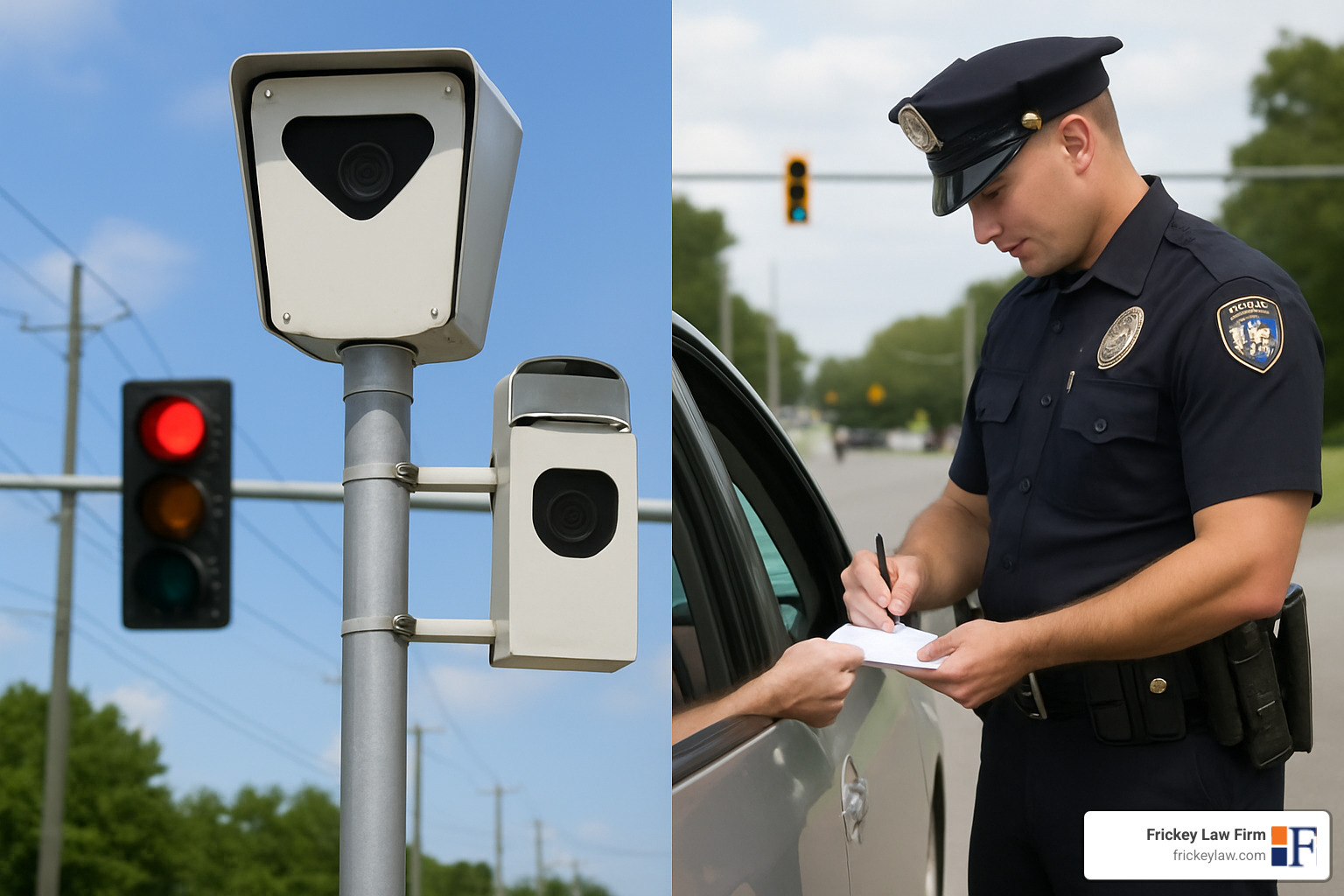
Do red light camera tickets add points or raise insurance?
Good news if you’ve received a camera ticket in your mailbox! In most states, these automated citations are treated as civil violations rather than moving violations—and this distinction makes all the difference for your wallet and driving record.
Think of red light camera tickets as distant cousins to parking tickets. They’re typically issued to whoever owns the vehicle, not necessarily the person behind the wheel. This means zero points on your license in most jurisdictions. Your driving record stays clean, and what your insurance company doesn’t know won’t hurt your rates!
These tickets operate under civil enforcement rules, so the consequences are usually limited to the fine itself. In Pennsylvania, New York, and Maryland, the law explicitly prevents these tickets from adding points to your license or being used against you for insurance purposes. In NYC, for example, those $50 camera tickets go to the registered owner regardless of who was actually driving.
But don’t get too comfortable—there are exceptions. Some places have special rules for repeat offenders. In New York, if you rack up five or more camera violations within a year, you might find yourself completing a mandatory safe driving course or, in extreme cases, watching your vehicle get impounded. Not exactly how most of us want to spend our weekend!
Officer-issued tickets: why the same light can cost you more
When those red and blue lights flash in your rearview mirror after running a red light, brace yourself—the consequences are typically more severe than a camera ticket.
How much is a red light ticket from an officer? It’s not just about the upfront cost. Officer-issued tickets are classified as moving violations that add points to your driving record—3 points in Pennsylvania, 1 point in California, and a whopping 4 points in Nevada. Those points aren’t just numbers; they’re like little financial time bombs for your insurance rates.
A single moving violation can trigger insurance premium increases of 20-30%, and these hikes often stick around for 3-5 years. Do the math, and you’ll see that a $200 ticket could actually cost you thousands over time. Ouch!
The consequences don’t stop there. Accumulate too many points, and your license could be suspended. In Pennsylvania, hitting 6 points means you’ll need to pass a written exam, while 11 points leads to automatic suspension. In Nevada, red light violations are actually classified as misdemeanors rather than simple infractions—potentially carrying jail time. That’s right, jail time for running a red light!
Despite these harsh penalties, there’s good reason for enforcement. Research by the Insurance Institute for Highway Safety has shown that red light cameras have contributed to a 21% reduction in fatal red light running crashes in large cities and a 14% reduction in all fatal crashes at signalized intersections. Safety first, but your wallet might prefer the camera ticket if you had to choose.
The best ticket is the one you never get—by stopping safely when the light turns yellow!
Resolving Your Ticket: Payment, Deadlines & Defense Strategies
Once that dreaded red light ticket arrives in your mailbox or on your windshield, don’t panic. You’ve got options, and knowing how to steer them can save you time, money, and stress.

Step-by-step: from notice to paid (or dismissed)
First things first—take a deep breath and look closely at your ticket. Different cities use different coding systems. In Philadelphia, for example, a ticket with an “RL” prefix is handled completely differently than one with a “536” prefix. This small detail can make a big difference in how you proceed.
Next, review the evidence. Most how much is a red light ticket notices include a way to access photos or video of the alleged violation. Use the citation number and PIN provided to check out exactly what they claim you did. Sometimes what you see might surprise you—and give you grounds to contest the ticket.
Now comes decision time. You’ve generally got three paths forward: pay up and accept any consequences, fight the ticket at a hearing, or in some jurisdictions, take a defensive driving course to reduce the financial sting. Each option has its merits depending on your situation and the strength of your case.
Watch that calendar! Most jurisdictions give you just 30 days to respond. Miss that window, and you could face late fees of $10-$25 or more—and eventually, collection actions or holds on your vehicle registration. That original how much is a red light ticket amount can balloon quickly if ignored.
Ready to pay? Most places offer multiple payment methods to make it relatively painless. Online payments are usually quickest but might include a small processing fee. You can also mail a check (never cash!), pay by phone with a credit card, or visit a payment center in person if you prefer the face-to-face approach.
If you’re leaning toward contesting the ticket, request that hearing within the same 30-day timeframe. The good news? Many courts now offer virtual hearings via Zoom or similar platforms, so you might not even need to take time off work to make your case.
Common defenses that win
Not all tickets are created equal, and some can absolutely be beaten with the right approach. At Frickey Law Firm, we’ve seen several defenses work consistently well for our clients.
Faded stop lines can be your friend in court. If the line where you were supposed to stop was worn away or poorly marked, how could you know exactly where to halt? Philadelphia drivers have reported success with this defense when they could prove the markings were unclear.
Emergency situations sometimes force even the most careful drivers through red lights. Whether you needed to make way for an ambulance or avoid a collision, these extenuating circumstances can form a valid defense. Courts generally understand that safety sometimes trumps strict adherence to signals.
Camera malfunctions happen more often than you might think. These devices require regular calibration and maintenance, and requesting certification records can sometimes reveal that the camera that caught you wasn’t up to standard. Technical glitches have voided many a ticket.
Vehicle misidentification is another common issue. In the split second a camera captures an image, it might record the wrong license plate or misidentify a similar-looking vehicle. Always scrutinize those photos carefully—the car in question might not even be yours!
If someone else was driving your car when the violation occurred, you might be able to file an affidavit identifying the actual driver. In Delaware, for instance, vehicle owners can submit notarized statements shifting responsibility, though you’ll still be on the hook if the identified driver doesn’t pay up.
The reality is that how much is a red light ticket matters less if you can get it dismissed entirely. At Frickey Law Firm, we’ve helped countless clients successfully contest these citations by spotting technical issues or presenting compelling evidence that changes the narrative.
Paying without question isn’t your only option. With the right approach—and sometimes the right legal help—you can steer this process with minimal impact on your wallet and driving record. Save Money on Traffic Tickets by understanding all your options before making a decision.
How Red Light Cameras Work, Locations & Legal Landscape
Understanding how red light cameras operate can help you both avoid violations and contest them if necessary.
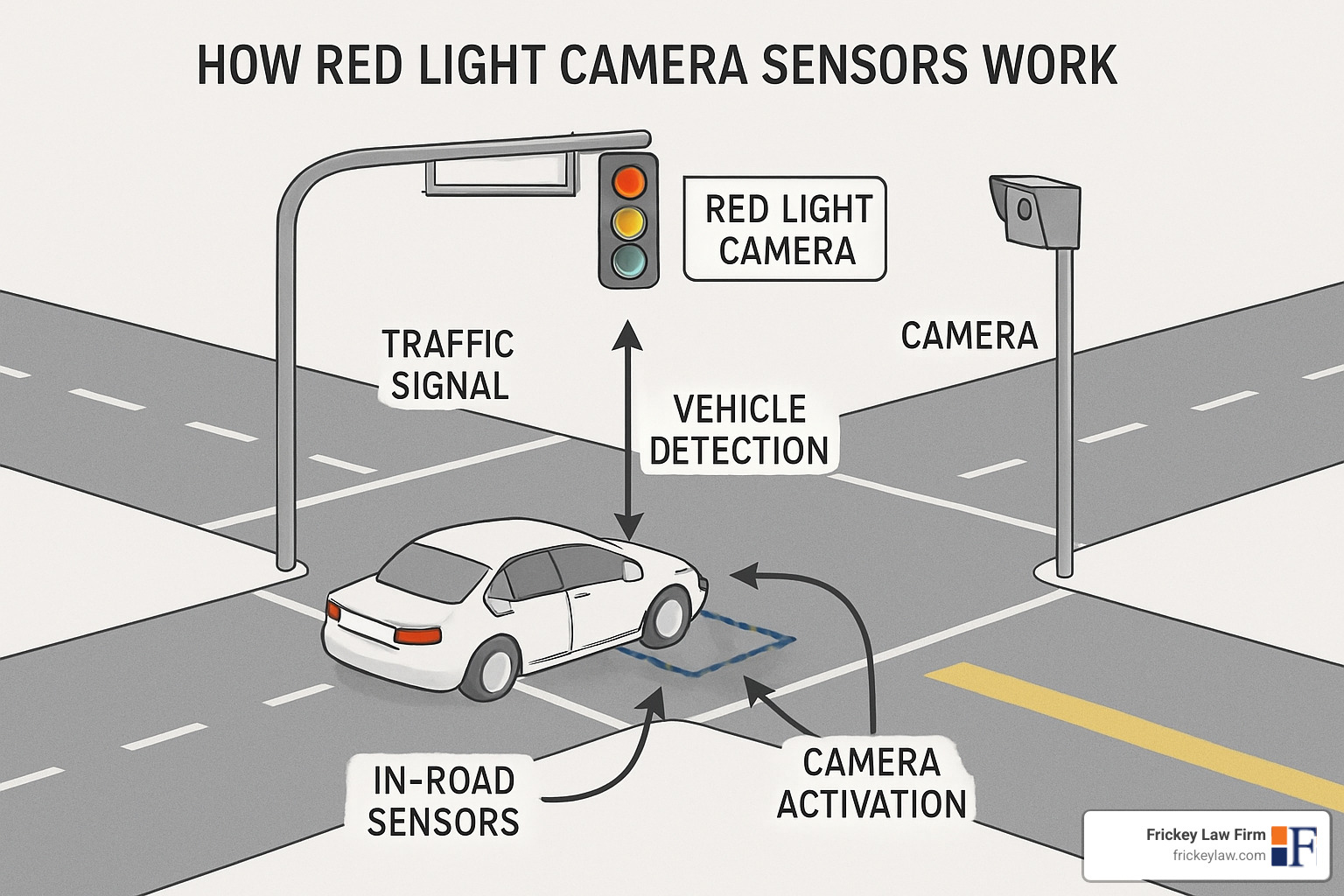
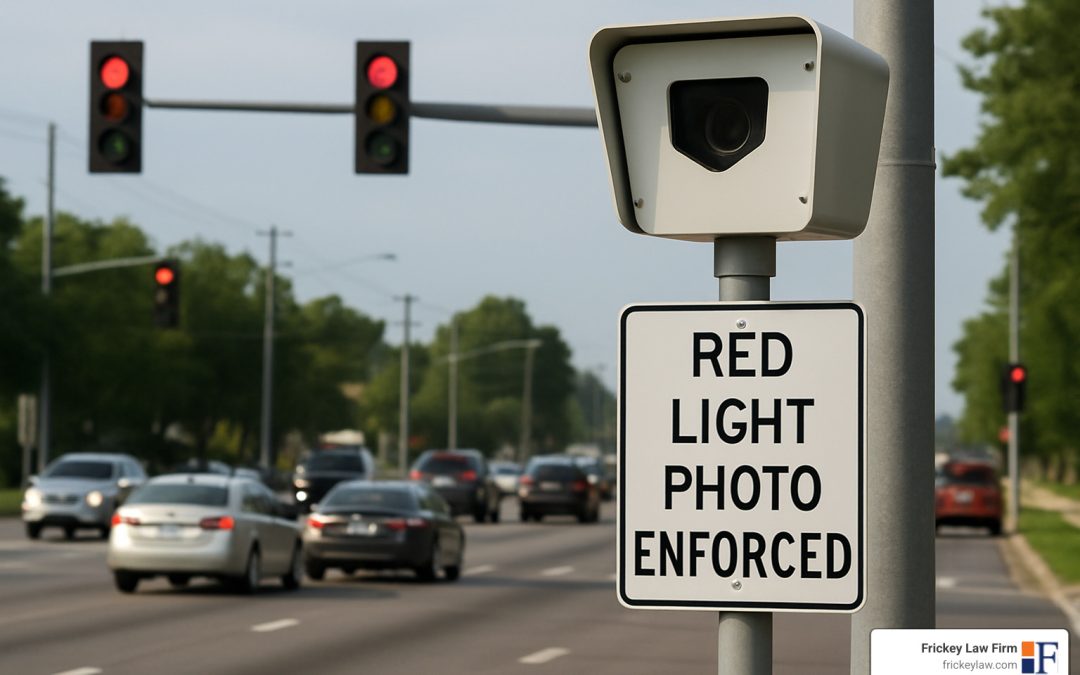
Ever wonder how those silent sentinels at intersections actually catch you? It’s not magic – it’s actually pretty clever engineering. Red light cameras rely on a network of sensors embedded in the road that talk to both the traffic signal and the camera system.
When you approach an intersection, these in-road loops detect your vehicle’s presence. The system patiently waits, monitoring the traffic signal, and only springs into action when the light turns red. Here’s the critical part – there’s typically a 0.3-second grace period after the light changes before the camera activates. This prevents tickets for those “caught in the middle” situations we’ve all experienced.
If your vehicle crosses that white stop line after the light has turned red (and after that brief grace period), the sensors trigger the camera to snap multiple photos. These usually include your car behind the stop line with the red light visible, your vehicle in the intersection while the light is still red, and a close-up of your license plate – creating a pretty comprehensive case against you.
How much is a red light ticket might depend partly on who reviews these photos. In most places, a human officer must verify the violation before a ticket is issued, which helps prevent errors from the automated system. Once confirmed, that dreaded notice finds its way to your mailbox.
Currently, red light cameras are legal in 22 states, while other states have banned or restricted their use. Interestingly, New York City pioneered these systems over two decades ago. According to research from the Insurance Institute for Highway Safety, these cameras have contributed to significant reductions in dangerous T-bone crashes at intersections.
Yellow light timing plays a crucial role in fairness – typically 3 seconds for 30 mph zones and 4 seconds for 40 mph zones. Some drivers have successfully contested tickets by proving the yellow light duration was inadequate for the approach speed.
Finding cameras before they find you
“I never saw the camera until I got the ticket in the mail!” is something we hear often at Frickey Law Firm. Fortunately, most jurisdictions aren’t trying to play “gotcha” with these devices.
Most cities with red light camera programs publish their locations openly. Philadelphia’s Parking Authority, for example, maintains a complete list of all 31 camera-equipped intersections on their website. Similarly, Yonkers, NY provides an interactive Google Map showing the exact placement of their 25 authorized cameras.
If you can’t find a published list, camera installations are public information. You can often obtain location data through simple public records requests to your local transportation department.
Many drivers now rely on navigation apps that include red light camera alerts as part of their traffic warning systems. These can provide helpful reminders to be extra cautious at camera-equipped intersections.
While knowing camera locations might help you avoid tickets, I always remind my clients that the primary goal is safety. Red light cameras are typically installed at intersections with high crash rates, so extra caution at these locations protects both your wallet and your well-being.
Right-on-red rules & special cases
Right turns at red lights generate a surprising number of camera tickets – and plenty of confusion. Let me clear things up.
In all jurisdictions, a complete stop before turning right on red is non-negotiable unless explicitly posted otherwise. Many drivers perform what I call the “rolling pause” – slowing dramatically but never actually stopping. Cameras don’t give points for style; they only recognize a full stop.
Always scan for no-turn-on-red signs at intersections. These restrictions exist for specific safety reasons, often due to limited visibility or pedestrian crossing patterns. Camera systems will flag these violations just as quickly as straight-through red light runs.
Red arrow signals deserve special attention. A red arrow specifically prohibits the indicated movement, even when a right turn would normally be permitted on a regular red light. This distinction trips up many drivers.
School and work zones often come with improved penalties. In Nevada, for example, the standard red light fine of $305 more than doubles to $710 in these designated areas. The rationale is clear – extra protection where vulnerable pedestrians are present.
One final note – even at camera-enforced intersections, an officer can still pull you over and issue a traditional moving violation ticket. In such cases, the camera ticket is typically dismissed in favor of the officer’s citation, but you’re dealing with the more serious consequences we discussed earlier.
If you’re facing confusion about right-on-red rules or need more information about Red Light Violations, our team at Frickey Law can help clarify your specific situation and options.
Conclusion
Let’s face it—seeing those flashing red and blue lights in your rearview mirror or finding that unexpected envelope in your mailbox is never a good feeling. After exploring the ins and outs of how much is a red light ticket across the country, one thing is clear: the financial sting varies dramatically depending on where you are and how you got caught.

Whether you’re facing a $50 camera ticket in New York or staring down a potential $1,000 fine in Nevada, knowledge truly is power. The good news? You now have that knowledge at your fingertips.
How much is a red light ticket isn’t just about the immediate hit to your wallet. Those officer-issued tickets can haunt your driving record and insurance premiums for years to come, while camera tickets typically leave your driving record untouched. This distinction alone can save you hundreds or even thousands of dollars over time.
The 30-day clock starts ticking the moment you receive your ticket, so don’t let it gather dust on your kitchen counter. Each passing day beyond the deadline can pile on additional fees or even escalate to more serious consequences like registration holds.
While paying immediately might seem like the path of least resistance, take a moment to consider your options. Did the camera malfunction? Was the stop line faded? Were you yielding to an emergency vehicle? These and other valid defenses have helped many drivers successfully contest their tickets.
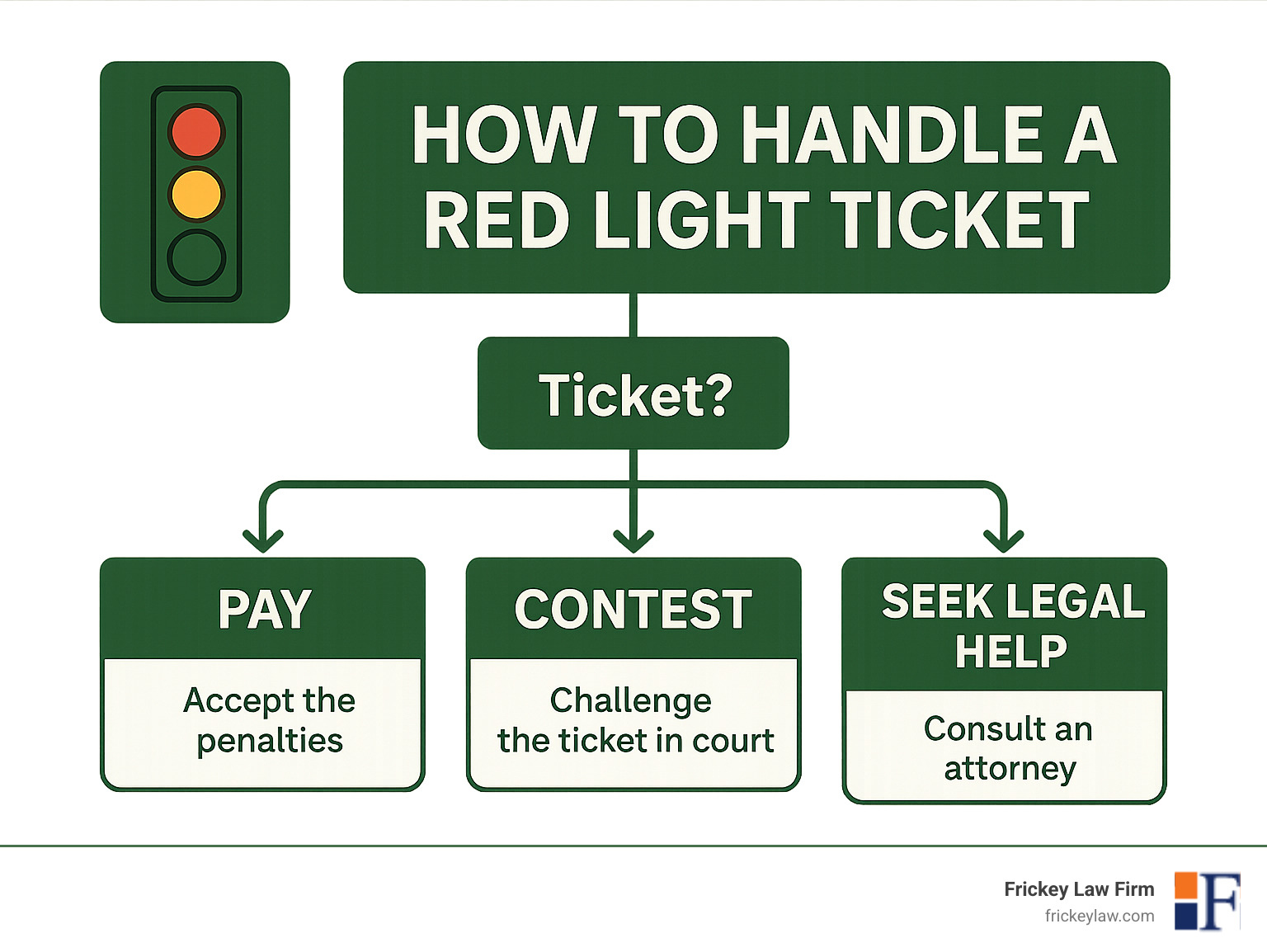
Of course, the best strategy is always prevention. Those red light cameras aren’t installed just to generate revenue—they’re there because intersections with red light cameras see significantly fewer fatal crashes. The momentary convenience of rushing through that yellow light simply isn’t worth the risk to your safety, your record, or your bank account.
Here at The Frickey Law Firm, we’ve guided countless Raleigh residents through the confusion and stress of traffic violations. Our board-certified team understands that each case is unique, and we’re committed to helping you find the most favorable resolution possible—whether that means negotiating reduced penalties or fighting an invalid citation.
Traffic enforcement should ultimately serve public safety, not just municipal budgets. By understanding both your rights and responsibilities on the road, you can make smarter decisions that protect your driving privileges and financial well-being.
If you’ve recently found yourself holding a red light ticket in Raleigh and feeling unsure about your next steps, you don’t have to steer this alone. The Frickey Law Firm’s award-winning team is just a phone call away, ready to put our proven track record to work for you.
More info about red-light ticket help