
by Michael Frickey | Jun 11, 2025 | Personal Injury
When Car Crashes Shatter Lives: Raleigh’s Legal Recovery Path
If you’ve been injured in a car accident in Raleigh and need legal help, here’s what you need to know:
- Local Experience Matters: North Carolina’s strict contributory negligence law means you need a lawyer familiar with Raleigh courts
- Free Consultations: Most Raleigh car accident attorneys offer no-cost case evaluations
- No Upfront Fees: Attorneys typically work on contingency (only paid if you win)
- Act Quickly: You have 3 years to file injury claims, but only 2 years for wrongful death
- Higher Compensation: Research shows represented clients recover approximately 3× more than those without attorneys
A car accident lawyer Raleigh NC provides essential guidance through North Carolina’s complex legal system after a collision. With thousands of crashes occurring annually in the Raleigh area—resulting in over 6,000 injuries and dozens of fatalities each year—victims often face overwhelming medical bills, lost wages, and insurance battles while trying to recover physically.
The aftermath of a car accident can change your life in seconds. North Carolina’s unique contributory negligence rule means that if you’re found even 1% at fault, you could be barred from any recovery—making professional legal representation crucial.
I’m Michael Frickey, a Board Certified Specialist in Criminal Law who has successfully represented hundreds of car accident victims throughout Raleigh and surrounding areas as a car accident lawyer Raleigh NC with extensive knowledge of local courts, insurance tactics, and compensation strategies.
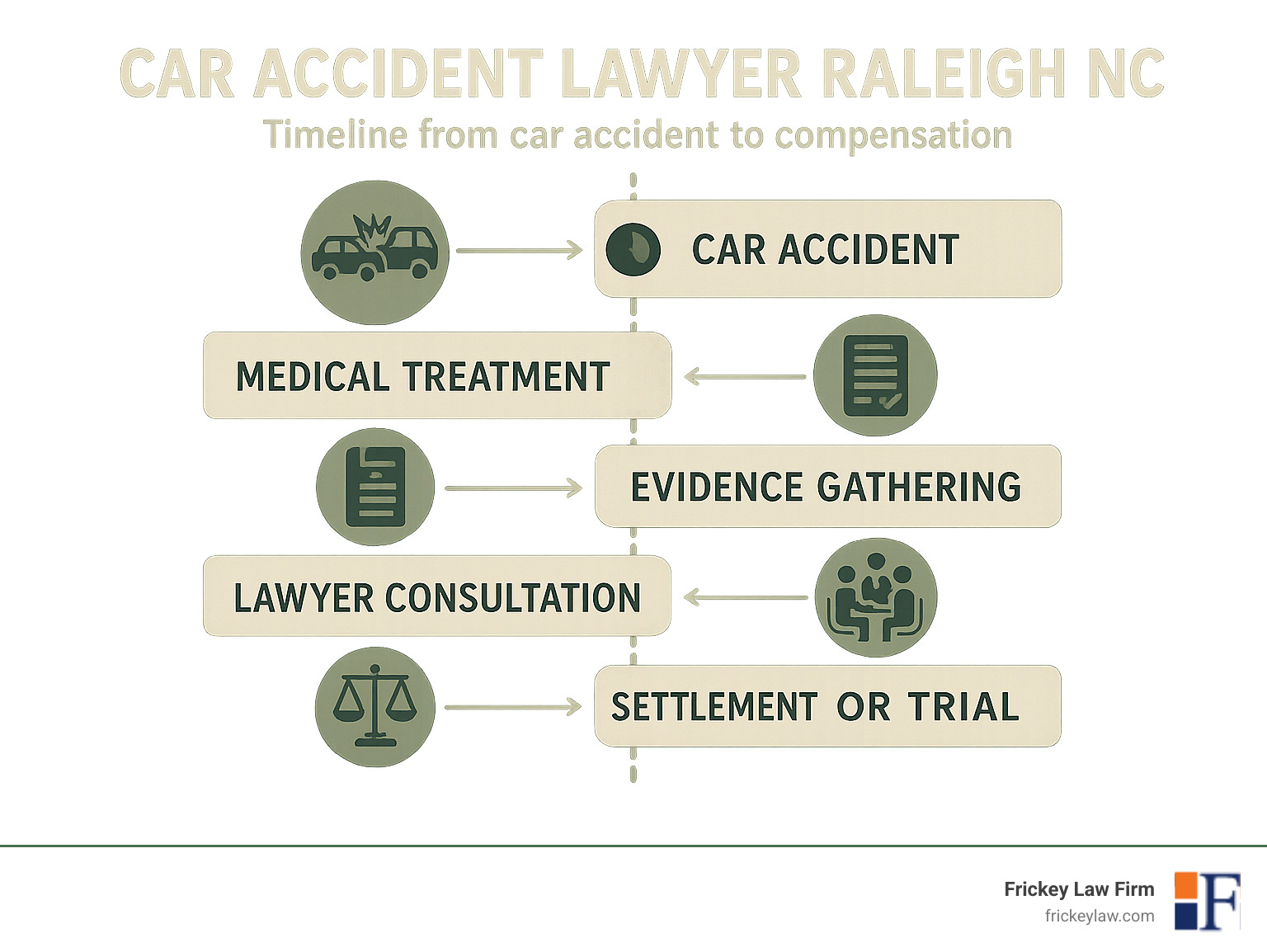
First 60 Minutes: What to Do Right After a Wreck
Those first moments after a crash can feel like they’re happening in slow motion. Your heart’s racing, adrenaline’s pumping, and suddenly you’re faced with decisions that could impact your life for months or years to come.
Start by taking a deep breath, then call 911 right away. Even if it seems like a minor fender-bender, having an official police report is essential for any future claims.
Don’t brush off medical attention with an “I’m fine.” Many serious injuries—especially whiplash and concussions—don’t fully reveal themselves until hours or days later. Getting checked out immediately creates a medical record that connects your injuries directly to the accident.
Your smartphone is your best friend in these moments. Take photos of everything: all vehicles from multiple angles, the entire accident scene, skid marks, traffic signs, and any visible injuries.
While at the scene, approach any witnesses. Their unbiased perspective can make or break your case, especially under North Carolina’s strict fault laws. Get their names and contact information.
Exchange information with the other driver, but watch your words carefully. A simple “I’m sorry” can be twisted into an admission of fault—and in North Carolina, that could cost you your entire claim.

Raleigh’s roadways can be particularly dangerous. Our busy corridors—I-40, I-440, Capital Boulevard, and Glenwood Avenue—are unfortunately hotspots for serious accidents. In 2020 alone, our city saw 13,481 crashes with 5,570 resulting in injuries and 40 in fatalities.
Car Accident Lawyer Raleigh NC checklist
Being prepared can make all the difference when you’re shaken up after a collision. Here’s a simple checklist you can keep in your glove box or on your phone:
- Program emergency contacts in your phone under “ICE” (In Case of Emergency)
- Store both digital and physical copies of your insurance information
- Create a note with important medical information first responders should know
- Download a free accident documentation app (many insurance companies offer these)
- Keep a small flashlight and reflective markers for nighttime accidents
I also recommend creating a dedicated folder on your smartphone specifically for accident documentation. Include shortcuts to your camera, voice recorder, and a notes app where you can quickly record witness information.
In those chaotic moments after a crash, you’re not just documenting an accident—you’re protecting your future.
Car Accident Lawyer Raleigh NC: Why Local Counsel Matters
When you’re dealing with the aftermath of a car accident in Raleigh, having a local attorney isn’t just convenient — it’s a strategic necessity. North Carolina’s legal landscape presents unique challenges that demand specialized knowledge and hometown experience.
The most significant hurdle? North Carolina’s contributory negligence law. Unlike most states that follow comparative negligence rules, North Carolina stands among just four states (with Alabama, Maryland, and Virginia) that adhere to this strict doctrine. What this means for you is sobering: if you’re found even 1% at fault for your accident, you could be completely barred from recovering any compensation. (For a deeper dive, see the overview on contributory negligence.)
This harsh reality makes insurance companies particularly aggressive when handling Raleigh accident claims. They’ll search for any tiny evidence suggesting you contributed to the accident — even in the most minor ways — to deny your claim entirely. That’s precisely why having a car accident lawyer Raleigh NC who understands local courts, knows the judges, and recognizes insurance company tactics is absolutely invaluable.
The numbers tell the story: accident victims who hire attorneys consistently receive significantly higher settlements than those who go it alone — often three times more, even after legal fees.
Here at The Frickey Law Firm, we offer free, no-pressure consultations to evaluate your case and explain your options. We work on a contingency fee basis, meaning we only get paid if we win your case.

| With a Car Accident Lawyer |
Without a Lawyer |
| Professional case evaluation |
Self-assessment of claim value |
| Strategic evidence gathering |
Limited knowledge of what evidence matters |
| Protection from insurance tactics |
Direct exposure to insurance adjuster pressure |
| Negotiation by experienced professionals |
Inexperienced negotiation against professionals |
| Knowledge of medical lien resolution |
Potential reduction of settlement by unpaid liens |
| Understanding of local court procedures |
Navigating complex legal system alone |
| Approximately 3× higher average recovery |
Typically lower settlements |
Contributory Negligence & “Last Clear Chance”
North Carolina’s contributory negligence rule feels unforgiving, but don’t lose hope. A skilled car accident lawyer Raleigh NC can employ several strategies to overcome this challenging hurdle.
One powerful legal doctrine is the “last clear chance” rule. This principle holds that even if you were partially negligent, you may still recover damages if the other driver had the last clear opportunity to avoid the accident but failed to do so.
The burden of proving your contributory negligence falls on the defense. A skilled attorney can challenge this defense through thorough accident reconstruction, expert witness testimony, traffic camera footage analysis, and by presenting compelling evidence of the defendant’s greater negligence.
Statute of Limitations & Deadlines Every Raleigh Driver Must Know
North Carolina law establishes strict deadlines for filing claims (see North Carolina General Statutes § 1-52):
- Personal injury claims: 3 years from the date of the accident
- Wrongful death claims: 2 years from the date of death
- Property damage claims: 3 years from the date of the accident
Missing these deadlines typically means permanently losing your right to seek compensation. To protect your rights, we recommend taking these steps immediately after an accident:
- Seek medical treatment and follow all doctor’s orders
- Report the accident to your insurance company (but avoid giving recorded statements without legal counsel)
- Gather and preserve all evidence from the accident scene
- Contact a car accident lawyer Raleigh NC as soon as possible
Show Me the Money: Damages You Can Recover
When life gets turned upside down after a car crash, most folks have one burning question: “What compensation can I actually get?” Let’s break down what you’re entitled to after a Raleigh accident.
Think of your compensation as coming in three main types:
First, there’s the economic damages – these are the dollars-and-cents losses you can track on paper. Your medical bills (both what you’ve already paid and future treatments), paychecks you’ve missed while recovering, and that repair bill for your crumpled car. But it goes deeper than that. Physical therapy sessions, transportation to doctor appointments when you couldn’t drive, modifications to your home if you’re temporarily using a wheelchair – all of these count too.
Then there’s the human side – non-economic damages. This compensates for things that don’t come with receipts but are just as real: the physical pain that keeps you up at night, the anxiety that hits when you approach an intersection, the family events you missed because you were laid up in bed.
In certain cases involving truly reckless behavior, punitive damages might come into play. If the driver who hit you was texting while driving 30 over the speed limit, or was severely intoxicated, North Carolina law allows for additional compensation. These damages are capped at either three times your compensatory damages or $250,000 – whichever is greater.

When calculating pain and suffering, many attorneys use what’s called the “multiplier method.” This takes your economic damages and multiplies them by a factor between 1.5 and 5. The more severe your injuries, the higher the multiplier.
Here’s some good news many people don’t realize: While North Carolina does cap punitive damages, there is no cap on your compensatory damages. This means if you’ve suffered life-altering injuries, the compensation can accurately reflect the true impact on your life. More info about compensation services
How Much Is My Raleigh Crash Case Worth?
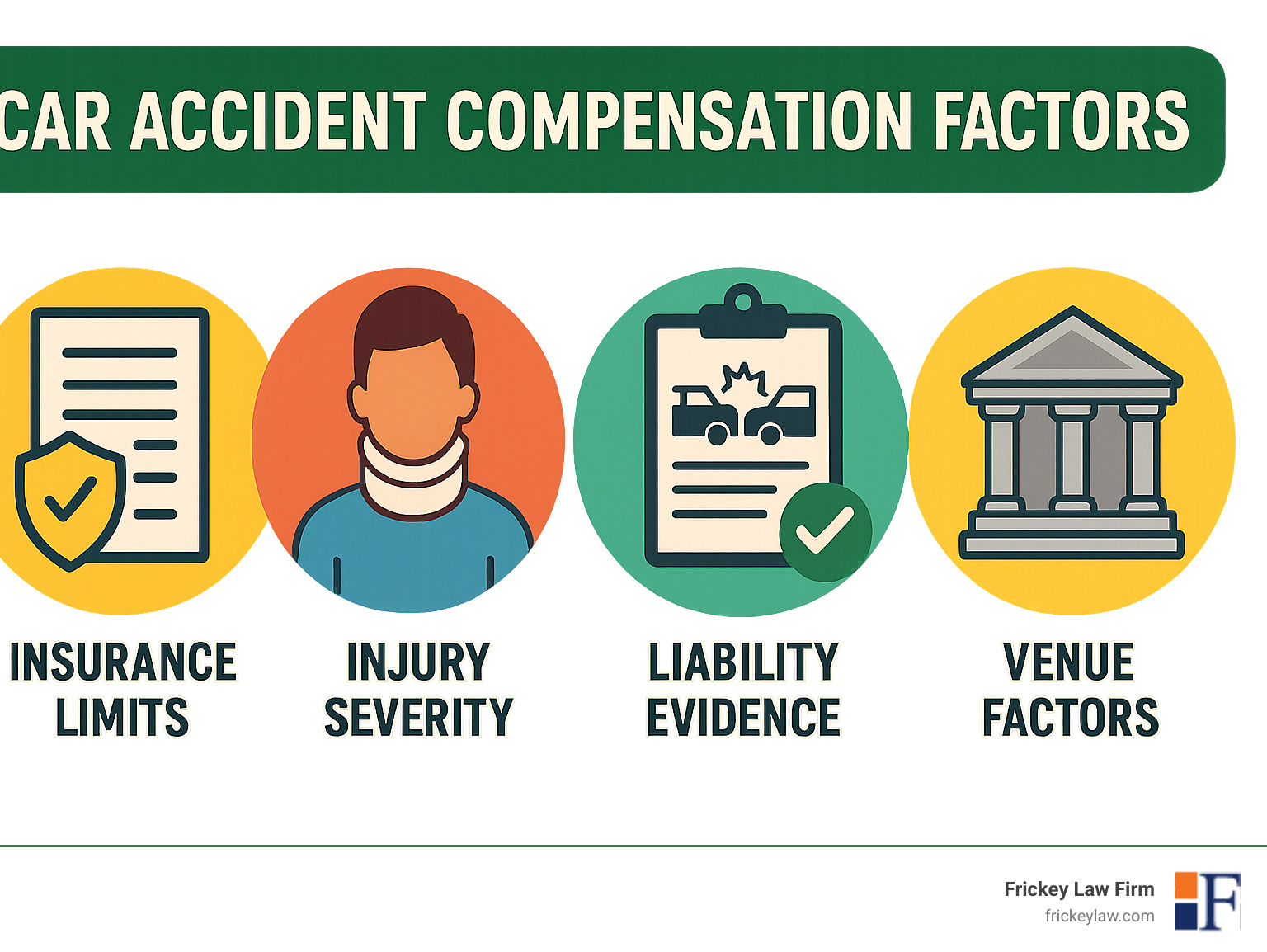
While every case has its own unique value, several key factors will influence what your claim is worth:
Insurance policy limits create the practical ceiling for most cases. North Carolina requires drivers to carry at least $30,000 per person and $60,000 per accident for bodily injury, plus $25,000 for property damage.
Injury severity creates a general range for compensation. Minor injuries like whiplash might settle between $5,000-$25,000, while moderate injuries requiring significant recovery time typically fall in the $25,000-$100,000 range. Cases involving surgery often reach $100,000-$500,000, and permanent disabilities or traumatic brain injuries can justify compensation from $500,000 to well over $1,000,000.
Where your case would be tried matters too. Wake County juries tend to be more moderate in their awards compared to some neighboring counties.
Building an Iron-Clad Claim
The strength of your car accident claim depends largely on the evidence you gather and how effectively it’s presented. As your car accident lawyer Raleigh NC, we implement a comprehensive strategy to build the strongest possible case.
Official Documentation:
* Police reports: We obtain the official accident report, which often includes the officer’s determination of fault.
* Traffic citations: If the other driver received a citation, this can serve as powerful evidence of their negligence.
* Vehicle “black box” data: Many modern vehicles record speed, braking, and other data that can be analyzed.
Expert Analysis:
* Accident reconstruction specialists: These experts can create detailed analyses of how the accident occurred.
* Medical experts: Physicians can testify about the extent of your injuries and long-term prognosis.
* Economic experts: Financial analysts can calculate the full impact of your injuries on your earning capacity.
Digital Evidence:
* Dash-cam footage: Increasingly common and extremely valuable evidence.
* Surveillance video: We check nearby businesses, traffic cameras, and residential doorbell cameras.
* Cell phone records: In cases involving distracted driving, these records can prove the other driver was using their phone.
Dealing With Insurance Adjusters the Smart Way
Insurance adjusters are professionals trained to minimize payouts. Their job is to save their company money, not to ensure you receive fair compensation. Here’s how we recommend handling interactions with insurance companies:
- Avoid recorded statements: Decline to give recorded statements without your attorney present.
- Don’t accept early settlement offers: Initial offers are almost always low. Once you accept a settlement, you typically can’t seek additional compensation, even if your injuries worsen.
- Let us handle communication: Having your attorney communicate with insurers prevents you from making statements that could harm your case.
Evidence to Collect & Preserve
The evidence-gathering process begins at the accident scene and continues throughout your medical treatment. Here’s what you should collect and preserve:
At the Accident Scene:
* Photos from multiple angles showing all vehicles involved
* Close-ups of damage to all vehicles
* Images of the entire accident scene, including road conditions and traffic signs
* Weather and lighting conditions
* Witness contact information and statements
Medical Evidence:
* Emergency room admission records
* Diagnostic imaging (X-rays, MRIs, CT scans)
* Treatment plans and medication prescriptions
* Physical therapy records
* Pain journals documenting your daily experience
Financial Impact Evidence:
* Pay stubs showing lost wages
* Letters from employers confirming missed work
* Bills for all medical treatments
* Receipts for out-of-pocket expenses
Choosing the Best Car Accident Lawyer in Raleigh
Finding the right car accident lawyer Raleigh NC might be the most important decision you’ll make after your crash. Think of it as choosing a guide for a difficult journey—someone who knows the terrain, speaks the language, and has successfully led others through before.

When selecting legal representation, look for a true specialist, not just any attorney who happens to handle accident cases. Board Certification from the North Carolina State Bar represents a proven level of expertise that can make all the difference in complex cases.
Trial experience matters tremendously, even if your case never sees a courtroom. Insurance companies track which attorneys actually try cases versus those who always settle. When they know your lawyer has courtroom confidence and a winning record, their settlement offers tend to reflect that reality.
Local knowledge gives your attorney an invaluable edge. A car accident lawyer Raleigh NC who regularly appears before Wake County judges understands their tendencies and preferences. They know which expert witnesses are most respected locally and which arguments resonate with Raleigh juries.
Client reviews tell an important story about what you can expect. Look for patterns in testimonials—do former clients consistently mention responsiveness, compassion, and results?
Fee transparency should be non-negotiable. During your initial consultation, a reputable attorney will clearly explain their contingency arrangement without pressure tactics or hidden costs.
At The Frickey Law Firm, we’ve built our practice around these principles, helping hundreds of Raleigh accident victims recover the compensation they deserve through board-certified expertise and genuine client care.
Car Accident Lawyer Raleigh NC scorecard
To help you evaluate potential attorneys, here’s a simple scorecard covering the essentials:
| Factor |
Questions to Ask |
What to Look For |
| Experience |
How many car accident cases have you handled? |
At least 5+ years specializing in car accidents |
| Settlement Success |
What’s your average settlement amount? |
Consistent record of fair settlements |
| Trial Record |
How many cases have you taken to trial? |
Willingness and ability to go to trial when needed |
| Client Satisfaction |
Can I speak with former clients? |
Positive testimonials and reviews |
| Resources |
What experts do you work with? |
Relationships with medical experts and accident reconstructionists |
| Communication |
How often will I hear from you? |
Regular updates and prompt responses to questions |
Red Flags & Deal Breakers
Trust your instincts if you notice concerning patterns during your attorney search. An overloaded caseload often reveals itself during your initial consultation—if they seem rushed or distracted now, imagine how they’ll handle your case when it gets complex.
Be wary of attorneys who never go to trial. While most cases do settle, you want someone who’s ready and able to fight for you in court when necessary.
The standard in personal injury law is contingency fees—you pay nothing unless you win. If an attorney asks for substantial money upfront, it’s worth questioning why.
Communication issues rarely improve over time. If your potential lawyer takes days to return calls now, this pattern will likely continue throughout your case.
No reputable car accident lawyer Raleigh NC will guarantee specific results. Legal cases have too many variables for absolute promises. Instead, look for honest assessments of your case’s strengths and challenges.
Local experience with North Carolina’s unique contributory negligence law is non-negotiable. Without deep familiarity with this strict rule, even a talented attorney from another state might miss crucial strategies to protect your claim.
For more comprehensive information about our approach to personal injury cases, visit our Raleigh Personal Injury Lawyer page.
Frequently Asked Questions About Raleigh Car Crash Claims
What if I’m partly at fault—can I still recover?
North Carolina’s contributory negligence rule is one of the toughest legal problems accident victims face. The harsh reality is that if you’re found even 1% at fault, you could be completely barred from receiving any compensation.
But don’t lose hope just yet. There are important exceptions that might save your case.
The Last Clear Chance Doctrine could be your lifeline. Even if you made a mistake, if the other driver had a clear opportunity to avoid hitting you but didn’t take it, you may still recover damages.
The burden falls on the defense to prove you were partly at fault. As your car accident lawyer Raleigh NC, I’ll work tirelessly to challenge any claims that you contributed to the accident.
Even if liability is murky, your own insurance coverage (like Med-Pay or uninsured motorist protection) might provide benefits regardless of who caused the crash.
Will my case have to go to court or will it settle?
Roughly 98% of personal injury cases settle before trial. Most of our clients never see the inside of a courtroom.
That said, several factors will influence whether your particular case settles:
Clear liability makes settlement more likely. When the other driver ran a red light with multiple witnesses, insurance companies typically won’t risk a trial.
Your insurance company’s approach matters too. Some insurers have reputations for fair settlements, while others fight tooth and nail on every claim.
At The Frickey Law Firm, I prepare every case as if it’s going to trial, even though most don’t. This thorough approach often leads to better settlements because insurance companies can tell when an attorney is ready for court.
The decision to settle or go to court always rests with you. My job is to give you honest advice about the strengths and weaknesses of any offer, but you’re always in control.
How much does it cost to hire a car accident lawyer in Raleigh?
I understand that after a car accident, money worries are probably keeping you up at night. Medical bills pile up while you’re missing work—the last thing you need is a lawyer demanding payment upfront.
That’s why I work on a contingency fee basis, which means:
You pay nothing upfront to get started. Your initial consultation is completely free, and I’ll begin working on your case without requiring any payment.
There are no fees unless you win. If I don’t secure compensation for you, you don’t owe me anything for my time and work.
My fee is a percentage of your recovery, typically one-third of the settlement or court award. This arrangement aligns my interests perfectly with yours—I only succeed when you do.
Contact us for a free consultation to discuss your case with no obligation.
Conclusion
There’s nothing quite like the peace of mind that comes with having a trusted advocate in your corner after a car accident. At The Frickey Law Firm, we’ve walked alongside hundreds of Raleigh residents through what might be one of the most challenging chapters of their lives.
North Carolina’s strict contributory negligence law isn’t just a legal technicality – it’s a potential roadblock that can prevent deserving victims from receiving any compensation whatsoever. This is why having experienced legal representation isn’t just helpful – it’s essential for protecting your rights and future.
Time truly is of the essence after an accident. Evidence fades, witnesses’ memories blur, and those unforgiving legal deadlines approach faster than you might expect. In North Carolina, you have just 3 years to file injury claims and only 2 years for wrongful death cases.
The numbers don’t lie – working with a car accident lawyer Raleigh NC typically results in settlements approximately three times higher than what unrepresented individuals receive. This isn’t just about getting “more money” – it’s about ensuring you have the resources needed for complete medical care, lost wages, and the support your family deserves.
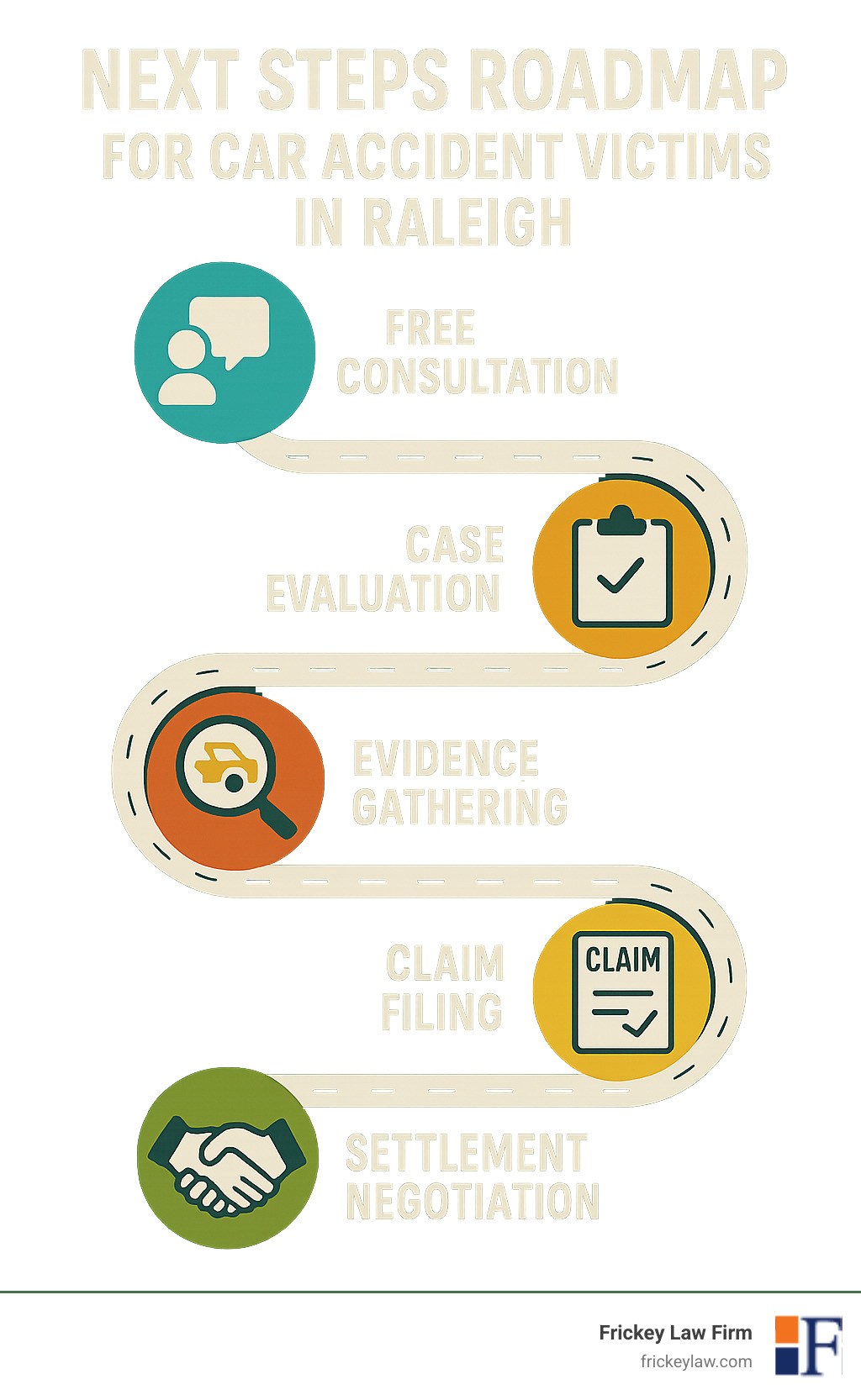
Please don’t face the insurance companies alone. Their adjusters handle thousands of claims each year – this might be your first and only serious accident. Level the playing field by having experienced legal guidance from day one. We invite you to reach out for a free, no-pressure consultation where we’ll listen to your story, evaluate your case, and help you understand all your options.
While we focus on the legal complexities of your case, you can direct your energy where it matters most – healing and moving forward. Your recovery journey is uniquely yours, and we’re here to support you every step of the way.
Contact us for a free consultation
by Michael Frickey | Jun 9, 2025 | Personal Injury
Finding the Right Legal Help After a Workplace Injury
Looking for a workers compensation attorney near me? Here’s what you need to know:
- Local knowledge matters: Attorneys familiar with your state’s laws and local courts can handle claims more effectively
- Free consultations: Most workers’ comp attorneys offer free case evaluations
- Contingency fees: Typically 15–25% of your settlement (no upfront costs)
- When to hire: Consider legal help if your claim is denied, benefits are delayed, or your injury is severe
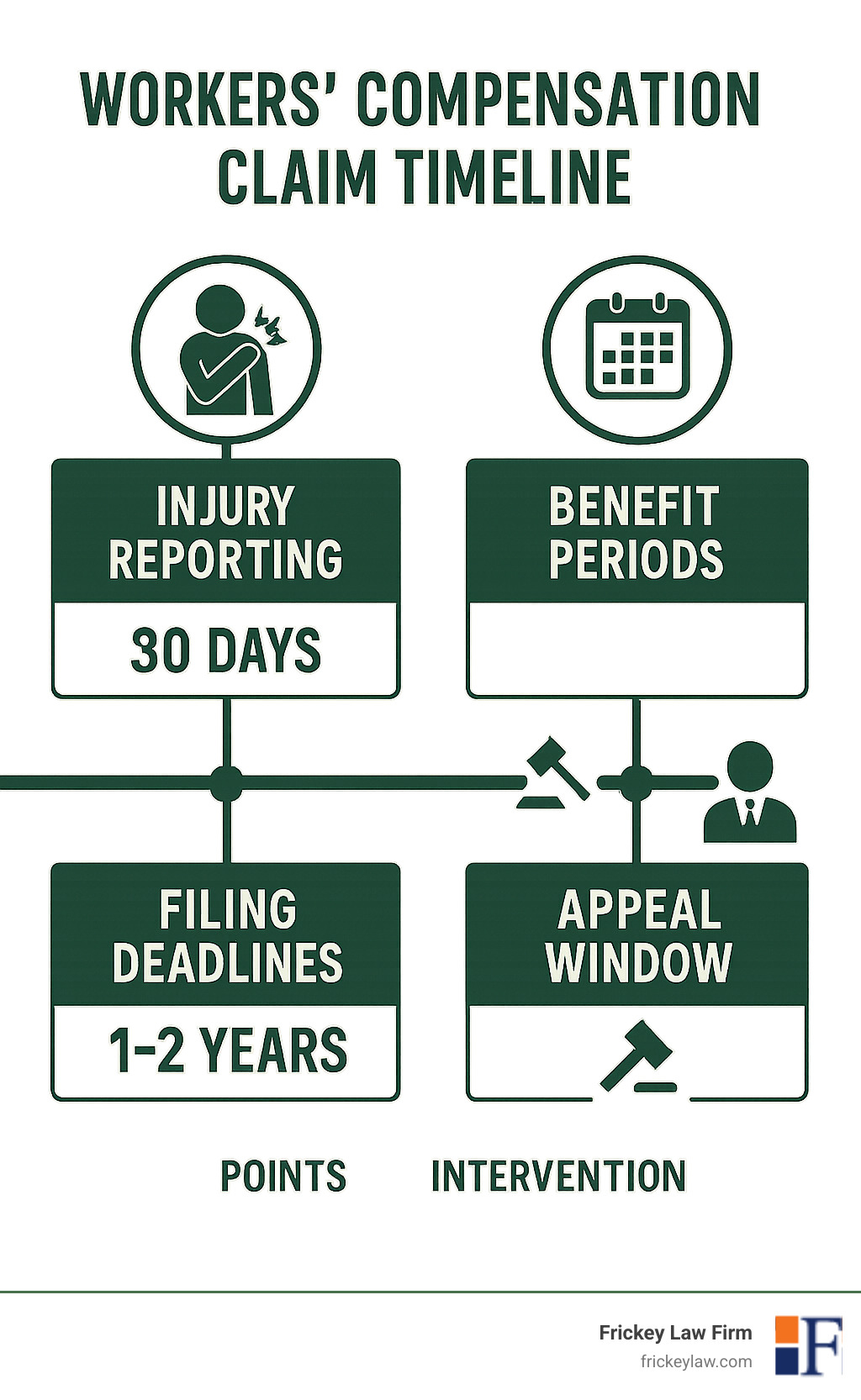
- Deadlines: In most states, you must report injuries within 30 days and file claims within 1–2 years
A workers compensation attorney near me can make all the difference when you’re dealing with a workplace injury. The system that’s supposed to help injured workers can quickly become overwhelming, especially when you’re trying to recover physically and financially at the same time.
Workers’ compensation is a no-fault insurance system designed to cover medical expenses and replace lost wages when you’re hurt on the job. But insurance companies often work to minimize payouts, employers might dispute claims, and the paperwork alone can be daunting.
Local attorneys understand the specific laws in your state, have relationships with local judges and medical providers, and can meet with you face-to-face to guide you through this difficult process.
I’m Michael Frickey, a Board-Certified attorney with extensive experience helping injured workers steer the complex workers’ compensation system in North Carolina, and I’ve seen how having a workers compensation attorney near me can dramatically improve outcomes for my clients.
Understanding Workers’ Compensation Basics
Think of workers’ compensation as a safety net designed to catch you when you’re injured at work. It’s insurance that most employers must carry to protect their employees – and in North Carolina, any business with four or more employees must provide this coverage. Construction companies need coverage even with just one employee.
What makes workers’ comp unique is its “no-fault” nature. You don’t need to prove your boss did something wrong to receive benefits. You get hurt on the job? You’re covered – regardless of who caused the accident. In exchange for these guaranteed benefits, you typically give up the right to sue your employer directly for the injury (though we’ll talk about some exceptions later).
Timing is everything with workers’ compensation. In North Carolina, you must report your workplace injury within 30 days of it happening. Miss this deadline, and you might lose your right to benefits – something a workers compensation attorney near me can help you steer.
Here’s some good news: workers’ compensation benefits aren’t subject to federal income tax. North Carolina also exempts these benefits from state income tax, so most injured workers receive their weekly checks tax-free, according to federal tax code.
Covered Injuries & Illnesses
Workers’ compensation covers more than just dramatic accidents. Here’s what’s typically covered:
Traumatic injuries happen in an instant – like when you fall off a ladder, get hit by falling objects, or are injured in a car crash while on company business.
Repetitive stress injuries develop over time. That wrist pain from years of typing? That’s carpal tunnel syndrome, and it’s covered. So are tennis elbow and back problems from repeated lifting.
Occupational diseases result from workplace exposure – like respiratory problems from chemical exposure or hearing loss from working in noisy environments.
Pre-existing condition aggravation is also covered. If your bad knee gets worse because of your job duties, that worsening may be compensable, even if the original knee problem wasn’t work-related.
Psychological injuries like PTSD may be covered if they develop after a physical workplace injury or due to extraordinary work conditions.
One important exception: injuries during your regular commute generally aren’t covered (the “coming and going” rule). However, if you’re driving a company vehicle or traveling for work purposes, you might still be protected.

Benefits You May Receive
When you’re hurt on the job, workers’ compensation provides several types of benefits to help you recover and stay financially afloat:
Medical benefits cover all reasonable and necessary treatment related to your work injury. Doctor visits, surgeries, hospital stays, medications, physical therapy, and even medical equipment – it’s all covered as long as it’s needed for your recovery.
Temporary Total Disability (TTD) kicks in when you’re completely unable to work during recovery. You’ll receive wage replacement equal to two-thirds (66.67%) of your average weekly wage if you’re single, or 75% if you have dependents. In North Carolina, these benefits can last up to 104 weeks (two years), though extensions are possible in certain situations.
Temporary Partial Disability (TPD) helps when you can work during recovery, but earn less due to restrictions. These benefits make up part of the difference between your pre-injury and current wages.
Permanent Partial Disability (PPD) compensates you for permanent impairment to specific body parts, based on your doctor’s impairment rating. Each body part has a “schedule” of weeks that determines your compensation.
Permanent Total Disability (PTD) provides long-term benefits if your injuries leave you permanently unable to return to any gainful employment.
Vocational rehabilitation services help you return to suitable employment if you can’t go back to your previous job.
Death benefits provide compensation to dependents if a workplace injury or illness results in death, including funeral and burial expenses.
| Benefit Type |
Description |
Duration |
Payment Rate |
| Temporary Total Disability (TTD) |
When completely unable to work |
Up to 104 weeks (extendable) |
66.67% of average weekly wage (75% with dependents) |
| Permanent Partial Disability (PPD) |
Compensation for permanent impairment |
Based on body part and impairment rating |
Based on impairment rating and body part schedule |
A workers compensation attorney near me can help ensure you receive all the benefits you’re entitled to under North Carolina law, especially when insurance companies try to minimize your claim.
When & Why to Hire a Workers Compensation Attorney Near Me
Navigating the workers’ compensation system can feel like trying to find your way through a maze – while injured and stressed. Though some claims go smoothly, many injured workers find they need professional help. Here’s when having a workers compensation attorney near me becomes not just helpful, but necessary:
You should consider reaching out to a local attorney when your claim hits roadblocks. Insurance companies often deny legitimate claims, hoping you’ll simply give up rather than fight back. If your benefits are arriving late or suddenly stop altogether, that’s another red flag that professional help could make all the difference.
Serious injuries add another layer of complexity. If you’re facing surgeries, permanent disability, or need long-term care, insurance companies fight harder to minimize these higher-value claims. The same applies if your employer is disputing whether your injury happened at work or questioning its severity.
Have you experienced negative treatment after filing your claim? Workplace retaliation – whether through demotion, reduced hours, or termination – is unfortunately common, and a local attorney can help protect your rights and livelihood.
When settlement offers arrive, having someone who understands the true value of your claim becomes crucial. Many injured workers accept settlements that don’t adequately cover their future medical needs or lost earning potential.
Cases involving pre-existing conditions are particularly challenging, as insurers often attribute your current problems to past injuries rather than your workplace accident. Similarly, if you might qualify for additional benefits like Social Security Disability, the interaction between different benefit systems requires expert guidance.
If someone besides your employer contributed to your injury – like a negligent contractor or equipment manufacturer – you may have additional claims worth pursuing. And when facing critical stages like hearings or mediations, having representation dramatically improves your chances of success.
Most workers compensation attorneys near me work on contingency, meaning they only get paid if you win. In North Carolina, attorney fees in these cases are regulated, typically around 25% of the benefits recovered – a small price to pay for proper representation and peace of mind.
Benefits of Hiring a workers compensation attorney near me
The numbers don’t lie – injured workers with attorneys consistently receive higher settlements and more favorable outcomes than those going it alone. Why? Because a good workers compensation attorney near me brings several crucial advantages to your case.
First and foremost, attorneys understand what your claim is truly worth. They consider not just current medical bills but future needs and the full extent of your disability. While you focus on healing, they handle all paperwork and deadlines, ensuring nothing falls through the cracks that could derail your claim.
Your attorney works closely with your healthcare providers to develop strong medical evidence supporting your case. When it’s time to negotiate, you’ll have an experienced professional facing off against insurance adjusters who otherwise negotiate claims every day against unrepresented injured workers.
If your case proceeds to a hearing, having an attorney who knows the local judges and procedures becomes invaluable. They recognize and counter common insurance company tactics designed to minimize your benefits.
A workers compensation attorney near me brings specific knowledge of North Carolina laws and local judicial tendencies that can make or break your case. Perhaps most importantly, they take the overwhelming legal burden off your shoulders during a time when your energy should be focused on recovery.
At the Frickey Law Firm, we’ve witnessed countless situations where our intervention transformed denied claims into substantial benefits, or converted inadequate settlement offers into fair compensation that truly reflected our clients’ needs.
Red Flags When Choosing a workers compensation attorney near me
Finding the right attorney matters – and spotting the wrong one early can save you significant headaches. Be cautious of attorneys making unrealistic promises about outcomes or specific settlement amounts. Ethical attorneys provide realistic expectations, not guarantees.
Specialization matters in workers’ compensation law. An attorney who handles these cases occasionally as part of a broader practice likely lacks the deep expertise of someone focused primarily on workers’ comp cases. Pay attention to communication patterns from the start – if an attorney or their staff is hard to reach during your initial consultation, this problem typically persists throughout your case.
Some firms take on too many clients, leaving little attention for individual cases. Don’t hesitate to ask about typical caseloads. While most attorneys work on contingency, the fee structure and potential costs should be clearly explained upfront, with no surprises.
Local experience makes a significant difference. An attorney unfamiliar with local workers’ compensation judges and procedures may struggle to steer the system effectively. Be wary of pressuring tactics urging you to sign immediately without thoroughly understanding your options.
Established attorneys should have satisfied clients willing to share their positive experiences. If an attorney can’t provide testimonials or references, consider it a potential warning sign.
The right workers compensation attorney near me can transform your experience with the workers’ compensation system, turning a frustrating process into one where you feel supported, informed, and confident that someone is truly fighting for your best interests. More info about attorney services
How to Find and Choose the Best Local Attorney
Finding the right workers compensation attorney near me shouldn’t feel overwhelming, even when you’re already dealing with an injury. Think of your search as building a relationship with someone who’ll guide you through a challenging time in your life.
Start by asking people you trust. Your friends, family members, or coworkers who’ve been through similar situations can offer honest insights about their experiences—both good and bad. These personal recommendations often lead to the most satisfying attorney relationships.
The North Carolina Bar Association maintains directories of attorneys specializing in workers’ compensation law. This official resource helps narrow your search to professionals with the right expertise for your situation.
Look for attorneys who’ve gone the extra mile in their professional development. In North Carolina, attorneys can become board-certified specialists in workers’ compensation law—a credential that signals advanced knowledge and experience in this specific field. Board certification isn’t just a fancy title; it means the attorney has demonstrated exceptional expertise.
While online reviews shouldn’t be your only deciding factor, they can reveal patterns worth noting. Are multiple clients mentioning the same strengths or concerns? These patterns often tell you more than any single review could.
Most workers compensation attorneys near me offer free initial consultations, which serve as informal interviews. Pay attention to how comfortable you feel explaining your situation and how clearly they explain complex legal concepts. A good attorney makes you feel heard, not rushed.
During your consultation, ask specifically about their experience with the North Carolina Industrial Commission and local hearing officers. An attorney who regularly appears before the same judges handling your case brings valuable insights about what approaches work best.
The Frickey Law Firm in Raleigh brings board-certified expertise and deep connections within North Carolina’s workers’ compensation system. Our established relationships with local judges, medical providers, and insurance adjusters create practical advantages for our clients that can’t be found in law books.
Questions to Ask During Consultation
Your consultation is your opportunity to determine if an attorney is right for you. Here are questions that reveal what you really need to know:
“How much of your practice focuses on workers’ compensation?” You want someone who lives and breathes workers’ comp law, not someone who handles these cases occasionally.
“Have you handled injuries like mine before?” An attorney familiar with your specific type of injury will better understand the medical aspects and typical recovery patterns.
“What’s your approach to my situation?” Listen for a thoughtful analysis rather than generic promises. A good attorney will explain potential strategies and challenges specific to your case.
“Who will I be working with day-to-day?” Some firms have the senior attorney handle the consultation, then assign your case to others. Know who will actually be managing your claim.
“How will we stay in touch about my case?” Clear communication expectations prevent frustration later. Will they return calls within 24 hours? Do they prefer email or phone?
Also ask about their fee structure, potential obstacles they foresee, realistic timelines, whether they’ll personally represent you at all proceedings, and examples of results in similar cases.
Third-Party Lawsuits & Dual Claims
While workers’ compensation typically prevents you from suing your employer, there are situations where you might have additional claims that could significantly increase your compensation.
If someone other than your employer or coworker contributed to your injury, you might have what’s called a “third-party claim.” For example, if you’re making deliveries and another driver hits your vehicle, you’d have both a workers’ comp claim and a personal injury claim against the other driver.
Defective equipment cases open another avenue. If machinery malfunctioned and caused your injury, the manufacturer might be liable through a product liability claim alongside your workers’ comp case.
Property owners may be responsible if you’re working on someone else’s property and unsafe conditions cause your injury. This premises liability claim exists separately from your workers’ compensation benefits.
In rare situations involving intentional harm rather than negligence, you might have additional legal options beyond standard workers’ compensation.
These dual-track claims are valuable because personal injury claims, unlike workers’ compensation, allow recovery for pain and suffering and don’t cap wage loss at two-thirds of your salary. However, they’re also complex because your workers’ compensation insurer may place a lien against your third-party recovery to recoup benefits they’ve paid.
A skilled workers compensation attorney near me understands how to coordinate these overlapping claims to maximize your total recovery while navigating the technical legal requirements of each. The scientific research on third-party claims shows how these legal principles have developed to protect workers while maintaining the workers’ compensation system.
Filing & Maximizing Your Claim Step-by-Step
Navigating the workers’ compensation process doesn’t have to feel like solving a puzzle in the dark. Let me walk you through exactly what to do after a workplace injury to protect your rights and maximize your benefits.
First things first: report your injury immediately to your supervisor. In North Carolina, you have 30 days to notify your employer, but why wait? The sooner you report it, the stronger your claim. A simple email creating a paper trail can make all the difference later.
After reporting, seek medical attention right away. In workers’ comp cases, your employer or their insurance company typically controls your medical care. They’ll direct you to specific providers, though you can request a change if you have concerns about your treatment.
Within two years of your injury, you’ll need to file Form 18 with the North Carolina Industrial Commission. This formal claim document establishes your case officially. While it might seem straightforward, even small errors can lead to delays or denials—this is where having a workers compensation attorney near me can save you significant headaches.
Throughout your recovery, document everything carefully. Keep a journal of your symptoms, how your injury affects your daily life, and any conversations with your employer or their insurance company. These details often fade from memory but can prove crucial to your case.
Your doctor’s orders aren’t just medical advice—they’re legal protection. Following medical recommendations precisely shows you’re committed to recovery and prevents insurance companies from claiming you’re prolonging your disability.
Be extremely cautious with recorded statements. Insurance adjusters often request these early in the process when you’re still in pain or on medication. Their friendly demeanor masks their goal: finding inconsistencies to minimize your claim. Always consult with your attorney before providing any recorded statement.
If the insurance company schedules an Independent Medical Examination (IME), understand this doctor works for them, not you. These exams often result in opinions that favor the insurer. Your attorney can prepare you for what to expect and potentially attend with you to ensure fairness.
Never accept a settlement offer without professional review. Insurance companies typically start with lowball offers that don’t account for future medical needs or complications. An experienced workers compensation attorney near me can assess whether an offer truly covers your long-term needs.
If your claim faces resistance, prepare thoroughly for hearings before the North Carolina Industrial Commission. Your attorney will gather medical evidence, secure expert testimony, prepare witnesses, and develop compelling arguments to support your case.
Common Mistakes to Avoid
I’ve seen countless injured workers unknowingly damage their own claims. Don’t let these common pitfalls derail your case:
Delayed reporting creates immediate suspicion. When you wait days or weeks to report an injury, employers and insurers naturally question whether it actually happened at work. Even if you think an injury is minor, report it—you can always close the claim if it resolves quickly.
Your medical appointments aren’t optional. Missing doctor visits sends a powerful negative message about the seriousness of your condition. Insurance companies track attendance closely, and unexplained absences can lead to benefit termination.
Be completely honest with your doctors about your symptoms and limitations—but don’t minimize them. Some clients, especially those who pride themselves on toughness, downplay their pain. This almost always backfires when medical records don’t reflect the true severity of your condition.
Social media can damage your claim. That fishing trip or dance party video might seem innocent to you, but insurance companies regularly monitor claimants’ social accounts looking for evidence to contradict disability claims. Consider taking a social media break during your case.
Returning to work prematurely often leads to reinjury and complicated claims. Listen to your body and your doctor, not your financial worries or workplace pressure. The workers’ compensation system exists precisely to provide income while you properly heal.
Understanding and respecting your work restrictions protects both your health and your legal rights. Get written restrictions from your doctor, provide them to your employer, and politely but firmly decline tasks that exceed these limitations.
Appealing a Denial
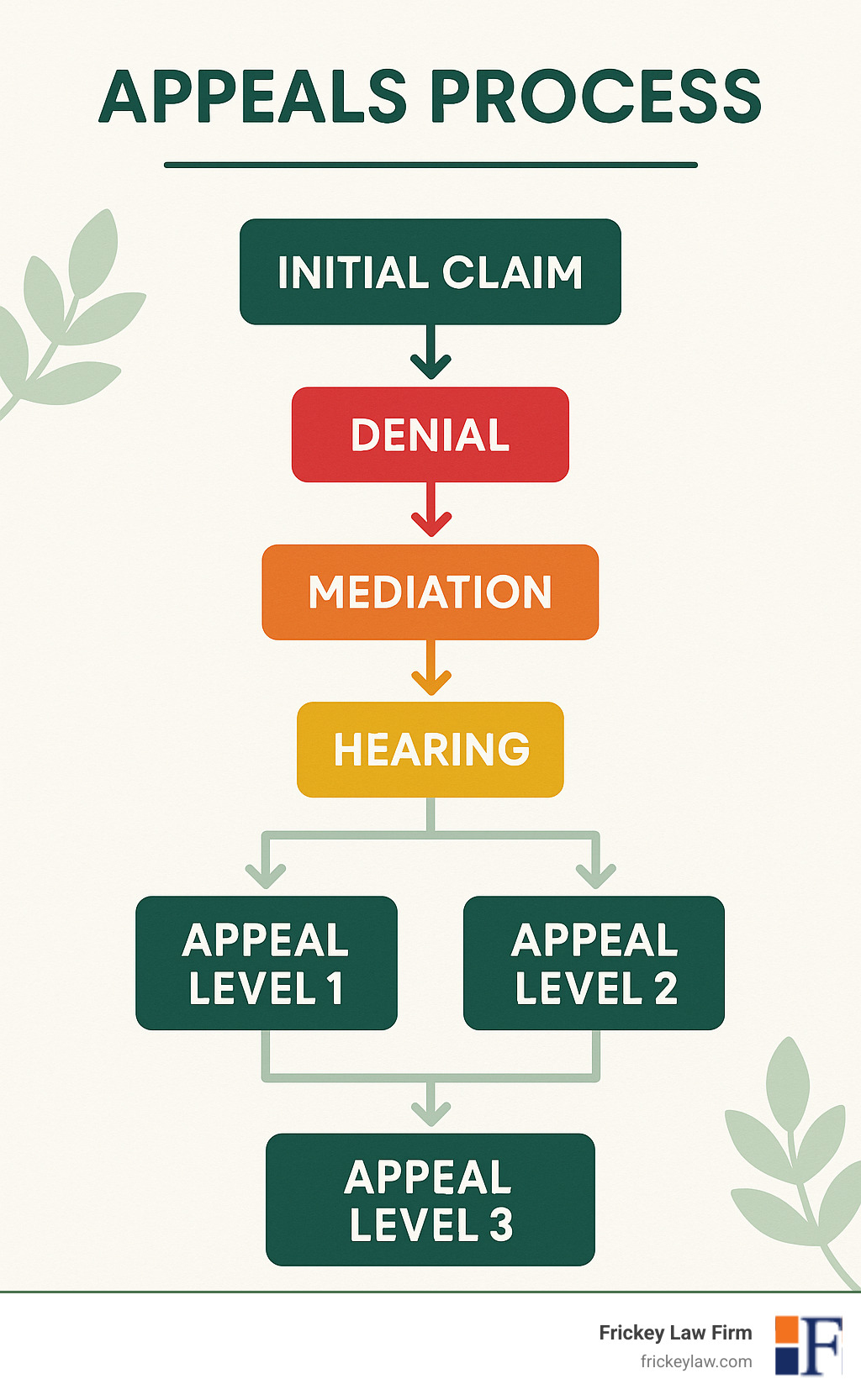
Receiving a denial letter can feel devastating, but it’s actually just the beginning of the process. Many successful claims start with a denial. Here’s how to fight back effectively:
First, carefully review the denial reason. Is the insurer claiming your injury wasn’t work-related? That you missed a deadline? That your treatment isn’t medically necessary? Understanding exactly why they denied your claim helps formulate your appeal strategy.
In North Carolina, you’ll need to file Form 33 (Request for Hearing) with the Industrial Commission within two years of the denial. This formal document initiates the appeal process and schedules your case for resolution.
Before reaching a hearing, you’ll typically participate in mandatory mediation. This structured negotiation with a neutral third party often resolves disputes without a formal hearing. Your attorney will prepare compelling arguments and evidence to present during this important opportunity for resolution.
If mediation doesn’t resolve your case, gathering strong evidence becomes critical. Your attorney will collect detailed medical records, expert opinions, witness statements, employment records, and other documentation to build a compelling case for the hearing.
The formal hearing before a Deputy Commissioner functions much like a small trial. Your attorney will present evidence, question witnesses, cross-examine opposing witnesses, and make legal arguments supporting your right to benefits. Your testimony will be crucial, and your attorney will thoroughly prepare you.
After the hearing, you’ll await the Deputy Commissioner’s written decision, which typically arrives within several months. If the decision is favorable, you’ll begin receiving benefits. If not, you have further appeal options.
The appeals process can continue to the Full Commission, the North Carolina Court of Appeals, and potentially the Supreme Court of North Carolina. Each level provides an opportunity to correct errors in previous decisions.
At Frickey Law Firm, we’ve guided countless injured workers through successful appeals, turning initial denials into substantial benefits. The key is persistence, thorough preparation, and experienced representation from a workers compensation attorney near me who knows the North Carolina system inside and out.
Frequently Asked Questions about Local Workers’ Comp Representation
What deadlines apply in my state?
Time is truly of the essence when it comes to workers’ compensation claims in North Carolina. Missing a deadline can mean losing your right to benefits entirely—something I’ve unfortunately seen happen to injured workers who waited too long to take action.
In North Carolina, you need to be aware of these critical deadlines:
30 days is all you have from your injury date to notify your employer. This notification starts the official paper trail of your claim, and while verbal notice is technically acceptable, I always recommend putting it in writing.
2 years from your injury date to file Form 18 with the Industrial Commission. This form makes your claim official in the eyes of the state.
2 years from a denial to request a hearing by filing Form 33. This is essentially your appeal window if your claim gets rejected.
2 years from the last payment of medical compensation to request additional treatment. This is particularly important for injuries that may require ongoing care.
I’ve seen too many valid claims dismissed simply because paperwork wasn’t filed on time. Don’t let bureaucratic deadlines stand between you and the benefits you deserve.
Can I be fired for filing a claim?
The short answer is no—it’s illegal for your employer to fire you simply for filing a workers’ compensation claim. North Carolina law provides clear protections against this kind of retaliation.
That said, the real world can be more complicated. While your employer can’t legally terminate you for filing a claim, they can still let you go for unrelated reasons. For example, if company-wide layoffs occur or if you had documented performance issues before your injury, those could be considered legitimate grounds for termination.
If you suspect you’ve been fired, had your hours reduced, or faced other negative consequences because of your workers’ comp claim, don’t just accept it. You may have grounds for a wrongful termination lawsuit in addition to your workers’ compensation claim.
At the Frickey Law Firm, we take retaliation cases seriously and can help you understand whether your employer’s actions cross the legal line. Many workers feel powerless after an injury—I’m here to tell you that you have rights worth fighting for.
How are attorneys paid?
One of the most common concerns I hear from potential clients is worry about affording legal help. Let me put your mind at ease: you don’t need a penny in your pocket to hire a workers compensation attorney near me.
In North Carolina, workers’ compensation attorneys like myself work on what’s called a contingency fee basis. This means:
We only get paid if you win benefits. If we don’t succeed in getting you compensation, you owe us nothing for our time and effort.
No upfront costs to start your case. Your initial consultation is free, and we cover the costs of building your case.
Fees are regulated by the North Carolina Industrial Commission, typically set at 25% of your recovery. This ensures the fee is fair and proportional to your benefits.
Payment comes directly from your award, so you never receive a bill for attorney time.
This system ensures that quality legal representation is available to everyone, regardless of financial situation. It also aligns our interests perfectly with yours—we only succeed when you do.
At the Frickey Law Firm, we believe that injured workers deserve expert legal help without financial stress. That’s why we’re committed to this no-recovery, no-fee approach. Your focus should be on healing, not worrying about legal bills.
More info about workers’ compensation help
Conclusion
When you’re dealing with a workplace injury, the last thing you need is the added stress of battling an insurance company or trying to understand complex legal paperwork. That’s where having a dedicated workers compensation attorney near me becomes invaluable.
The workers’ compensation journey can feel overwhelming—from reporting deadlines to medical evaluations, from paperwork requirements to benefit calculations. But you don’t have to walk this path alone. A local attorney brings not just legal expertise, but a helping hand when you need it most.
Here in North Carolina, the system has specific requirements and timelines that can make or break your claim. A local attorney understands these nuances and has built relationships with the medical providers, judges, and insurance representatives you’ll encounter throughout your case. This local knowledge often translates to better outcomes and smoother processes.
At the Frickey Law Firm in Raleigh, we see beyond the paperwork to the person behind each case. We understand that your injury affects not just your ability to work, but your family, your financial security, and your peace of mind. Our board-certified expertise has helped countless North Carolina workers secure the care and support they deserve after workplace injuries.
The decision to seek legal help shouldn’t add to your worries. That’s why we offer free initial consultations and work on a contingency basis—you pay nothing unless we win your case. We believe everyone deserves quality representation, regardless of their current financial situation.
Don’t wait until problems arise with your claim. The earlier we can get involved, the better we can protect your interests and guide your case toward a favorable resolution. Your health and financial security are simply too important to leave to chance.
Let us shoulder the legal burden while you focus on what matters most—your recovery. With the Frickey Law Firm by your side, you gain not just an attorney, but an advocate committed to helping you rebuild and move forward after your workplace injury.
More info about workers’ compensation help

by Michael Frickey | Jun 4, 2025 | Traffic Lawyer
Red Light Ticket Reality Check: Pay, Fight, or Hire Help?
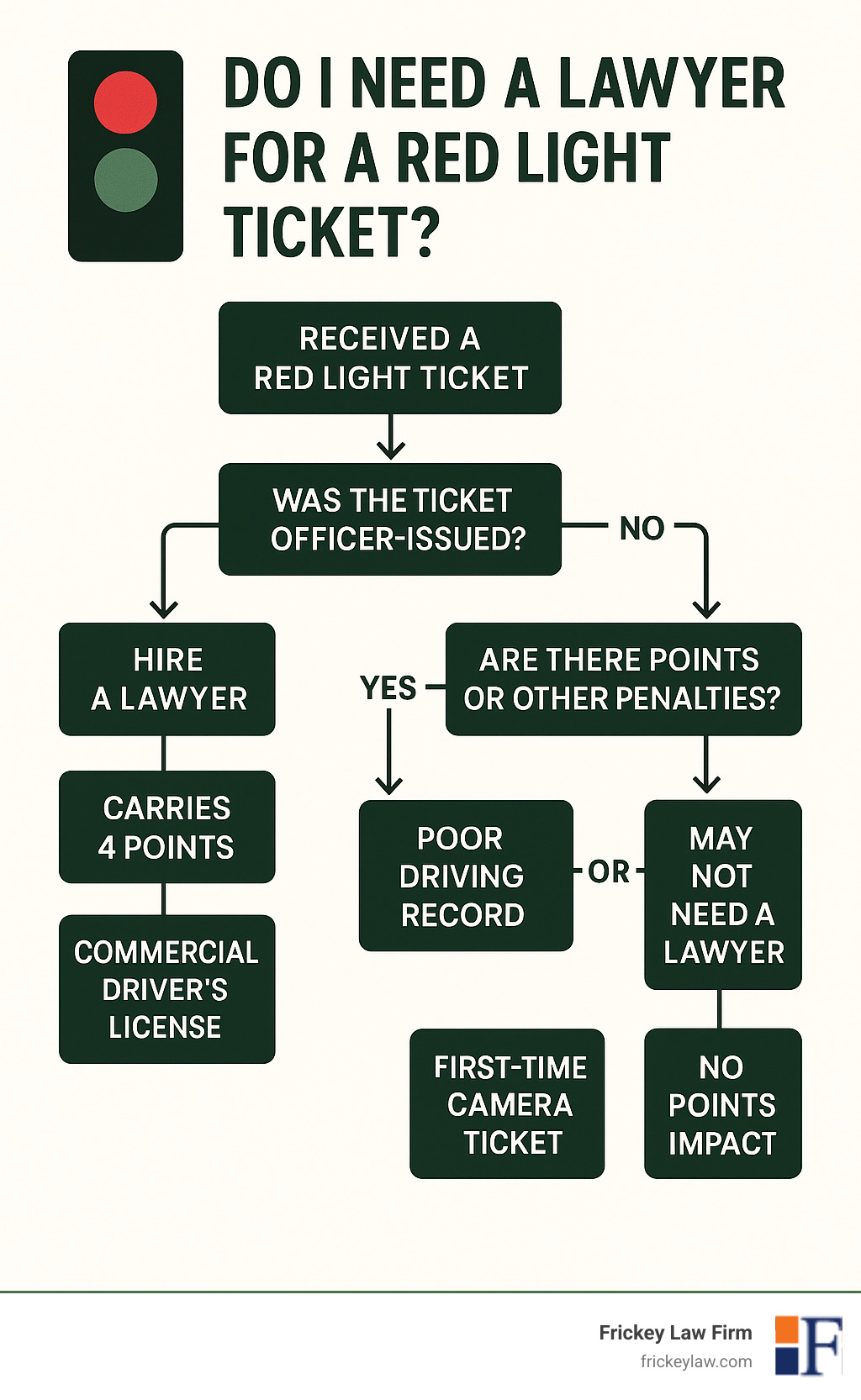
Do I need a lawyer for a red light ticket? The answer depends on your specific situation:
| Lawyer Recommended |
May Not Need a Lawyer |
| ✓ Officer-issued ticket (carries 4 points) |
✓ First-time camera ticket with clear photo |
| ✓ Commercial driver’s license at risk |
✓ Willing to pay fine and take traffic course |
| ✓ Multiple recent violations |
✓ Simple camera ticket with no points |
| ✓ Accident involved with the violation |
✓ Eligible for traffic school option |
| ✓ Facing license suspension |
✓ Clear case of mistaken identity/wrong driver |
Getting that dreaded red light ticket in the mail or being pulled over at an intersection can ruin your day. While a simple camera ticket might seem like just another bill to pay, the decision to fight it or hire legal help can have significant consequences for your driving record, insurance rates, and even your career if you drive professionally.
The impact varies dramatically between officer-issued tickets (which typically carry 4 points in many states) and camera tickets (often treated as civil infractions with no points). Your driving history, license type, and whether you were actually driving also play crucial roles in determining your best course of action.
I’m Michael Frickey, a Board Certified Specialist in Criminal Law with extensive experience handling red light ticket cases throughout Raleigh and North Carolina. I’ve helped hundreds of clients evaluate whether they need a lawyer for a red light ticket based on their unique circumstances and potential consequences.
Red Light Tickets 101: Officer vs Camera
Before deciding if you need legal help, let’s break down the key differences between the two types of red light tickets you might find yourself facing.
Running a red light happens when you enter an intersection after the traffic signal has turned red. In North Carolina and most states, this is considered a traffic violation because it puts everyone’s safety at risk.
But not all red light tickets are created equal. The way you get caught makes a huge difference in what happens next:
| Feature |
Officer-Issued Ticket |
Camera-Issued Ticket |
| Legal Classification |
Moving violation |
Civil infraction in most jurisdictions |
| Points on License |
Typically 4 points |
Usually 0 points |
| Insurance Impact |
Can increase rates 20-45% |
Generally none if paid promptly |
| Issuing Authority |
Police officer |
Automated system |
| Evidence Type |
Officer testimony |
Photographic/video |
| Contest Process |
Court appearance |
Administrative hearing |
| Typical Fine |
$100-$500 |
$100-$262 |
How Red Light Cameras Work
Those silent sentinels perched above intersections are more sophisticated than they appear:
Red light cameras use advanced technology that works like a patient, never-blinking traffic cop. When you approach an intersection, in-road sensors or radar technology detect your vehicle’s presence and speed. If the light turns red and you cross that white stop line anyway, the system springs into action.
The camera captures multiple high-resolution photos or video showing your vehicle before entering the intersection with the red light visible, your car in the intersection while the light is red, and a close-up of your license plate (just in case you were wondering how they know it’s you).
A few weeks later, the registered owner of the vehicle—not necessarily the driver—receives a surprise in the mail. This citation includes the photos, violation details, and payment instructions.
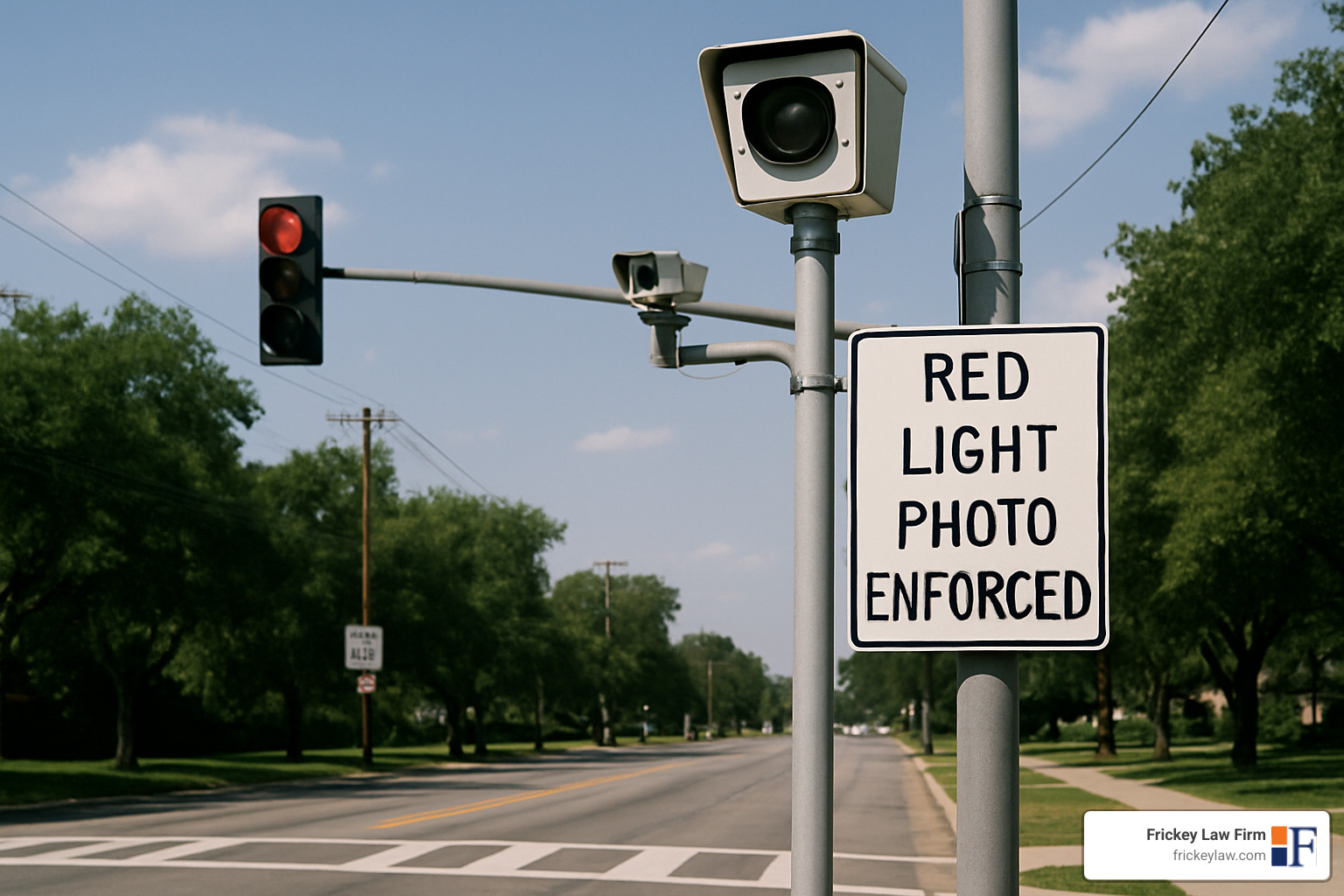
In North Carolina and many states, the law requires clear signage warning drivers about these cameras. You’ve probably seen those “Photo Enforced” signs at intersections—they’re not just there to spook you, they’re legally required.
The numbers tell an interesting story: Florida alone processed 253,500 red light camera violations in 2023—a 29% jump from 2021. This trend is happening in North Carolina too, as more cities accept automated enforcement.
For specific regulations on how the automated process works in some jurisdictions, you can check resources like the Automated Process information page.
What an Officer-Issued Ticket Looks Like
Getting a red light ticket from an actual police officer is a very different experience:
Instead of finding out weeks later in your mailbox, you’ll know immediately when those red and blue lights flash in your rearview mirror. Your heart sinks as you pull over, knowing exactly why you’re being stopped.
The officer approaches your window and asks for your license, registration, and insurance. They’ll explain that they personally witnessed you running the red light. Unlike the camera, which only captures your vehicle, the officer sees you behind the wheel.
You’ll receive a physical citation on the spot, complete with court date information and instructions. This face-to-face interaction creates a legal record of the stop that’s very different from an automated camera ticket.
If you decide to contest the ticket, the officer must appear in court to testify about what they saw. Their testimony, possibly supported by body camera footage, becomes the primary evidence against you.
Do I need a lawyer for a red light ticket in this situation? When an officer issues the ticket, you’re facing a true moving violation with points on your license—not just a civil fine. This makes the stakes significantly higher and legal representation potentially more valuable.
Penalties, Points & Insurance Fallout
That red light ticket sitting on your kitchen counter might seem like a simple fine to pay and forget – but the true cost can be much steeper than you imagine. Let’s pull back the curtain on what’s really at stake for your wallet and driving record.
Camera Tickets: Record & Insurance
When that dreaded envelope arrives with photos of your car crossing an intersection, there’s actually some good news:
Camera tickets typically fly under the radar when it comes to your driving record. In most places, including North Carolina, these automated citations are treated as civil matters – more like a parking ticket than a serious driving offense.
The biggest perk? No points on your license in most states if you pay promptly. Your insurance company likely won’t ever know about it during routine policy checks, keeping your premiums stable.
That said, camera tickets aren’t without teeth. Ignore one, and you might find yourself unable to renew your vehicle registration when the time comes. And watch out for those right-on-red citations – many cameras catch drivers who roll through rather than coming to a complete stop, something officers rarely enforce but cameras love to capture.
Looking at Florida as an example, a camera ticket starts at $158, but procrastinate on payment and that jumps to $262 – plus the potential for points if you delay too long. Not exactly pocket change!
Officer Tickets: The Hidden Costs
Getting pulled over by an officer for running a red light is a whole different ballgame – and the rules are much less forgiving:
Most states, including North Carolina, will slap 4 points on your driving record for an officer-issued red light ticket. Those points aren’t just numbers – they translate directly into dollars.
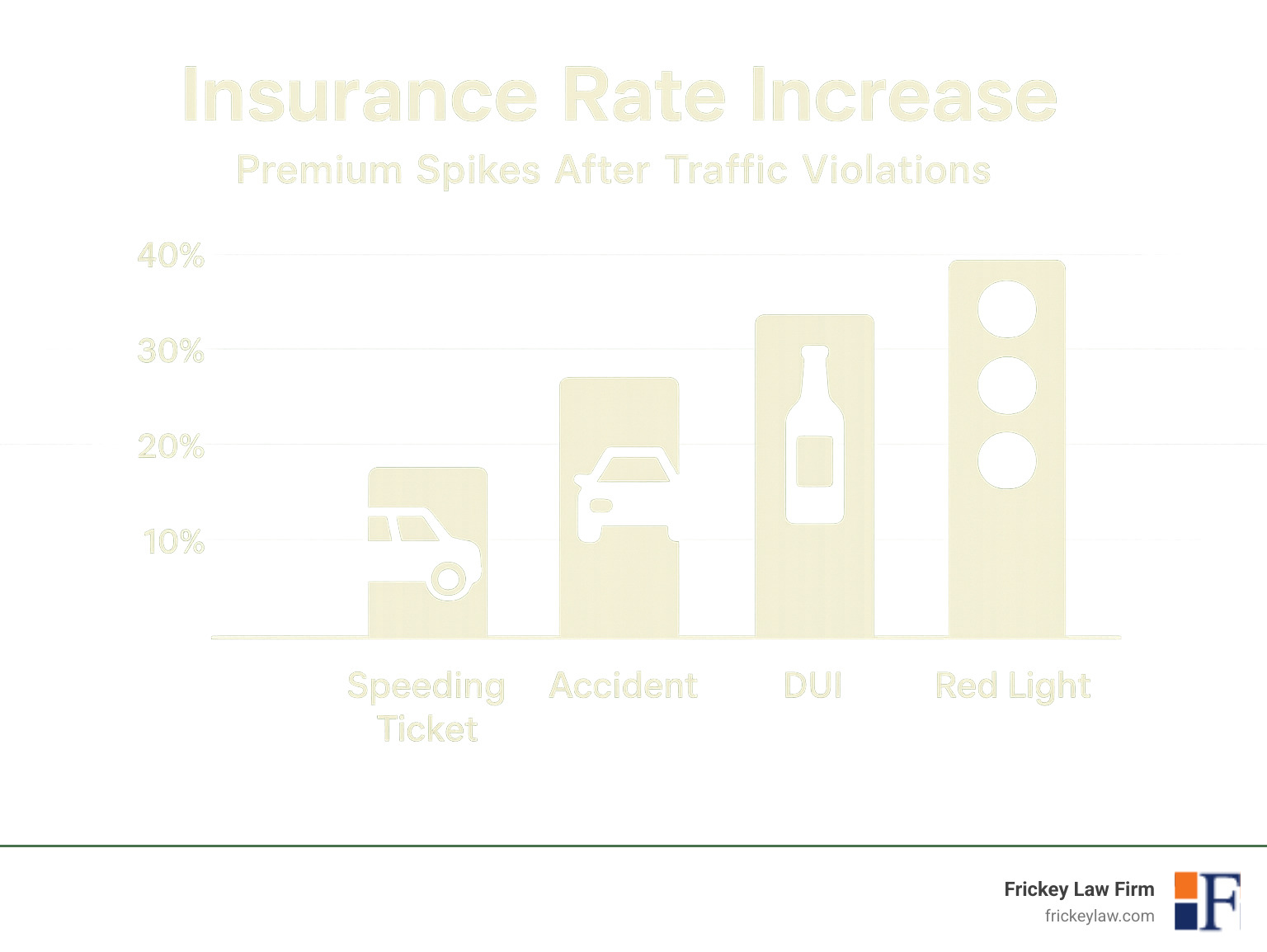
The real pain comes at insurance renewal time. A single red light violation can trigger a 20-45% premium increase that haunts you for three years. Do the math on your current premium, and you’ll quickly see how a $100-500 ticket balloons into thousands over time.
For drivers already walking a tightrope with previous violations, those 4 points could push you over the edge. In North Carolina, accumulate 12 points in three years, and you’re looking at a suspended license – and all the headaches that come with it.
Commercial drivers face even steeper consequences. Many states count violations as 1.5 times the normal point value for CDL holders, putting their livelihood directly in the crosshairs. When your license is your paycheck, do I need a lawyer for a red light ticket becomes a much more urgent question.
To add insult to injury, many states now require completion of a driver improvement course after paying a red light ticket. Since 2009, Florida has mandated these courses – adding both time out of your schedule and additional fees to the equation.
The bottom line? That “simple” red light ticket can cascade into a years-long financial drain that far exceeds the initial fine amount. Understanding these real costs is crucial when deciding whether to pay up, fight it yourself, or bring in professional legal help.
Do I Need a Lawyer for a Red Light Ticket? The Decision Matrix
When that red light ticket arrives in your mailbox (or gets handed to you through your car window), the question immediately pops up: do I need a lawyer for a red light ticket? It’s not always a straightforward yes or no. Let’s walk through a practical framework to help you make the right call for your specific situation.

Do I need a lawyer for a red light ticket—Key Situations Yes
You’ll definitely want to consider legal help if you’re in one of these higher-stakes scenarios:
Your license is hanging by a thread. If you’re already close to your state’s point threshold for suspension (that’s 12 points in a three-year period here in North Carolina), even one more violation could leave you without driving privileges. That’s when professional help becomes invaluable.
You drive for a living. For CDL holders, points aren’t just annoying—they’re career-threatening. A good traffic attorney understands the special regulations commercial drivers face and can fight to protect your livelihood.
There was a crash involved. Red light tickets that come with accident reports bring extra complications: potential civil liability, insurance claims, and possibly improved penalties. These cases almost always benefit from legal expertise.
The evidence looks shaky. Maybe the camera image is blurry, the timestamp seems off, or the officer’s view was obstructed. When there’s room to question the evidence, a lawyer can spot technical deficiencies that might lead to dismissal.
You’ve missed important deadlines. If you’ve already blown past the response window, you need help navigating the system to avoid additional consequences like license suspension or being unable to renew your registration. An attorney can often reopen communication channels that seem closed to the average driver.
Do I need a lawyer for a red light ticket—When DIY Might Suffice
In some situations, handling it yourself might make more sense:
It’s your first camera ticket and your record is spotless. For a straightforward camera violation with no points attached, simply paying the fine might be the most practical approach, especially with a clean driving history.
Traffic school is an option for you. Many jurisdictions let first-time or occasional offenders attend a defensive driving course instead of taking the points. If you qualify, this can be a straightforward DIY solution that avoids long-term consequences.
Someone else was driving your car. Camera tickets go to the vehicle owner, not necessarily the driver. Most jurisdictions allow you to submit an affidavit identifying who was actually behind the wheel. This paperwork process rarely requires legal assistance.
The fine is small with no points involved. When the ticket carries a minimal financial penalty and won’t affect your driving record, the math simply might not justify hiring representation.
The evidence is crystal clear. If there’s undeniable photographic proof showing your vehicle running a red light and you have no valid defense, fighting the ticket might just waste your time and money.
Gray Areas: Ask These Questions
For those in-between situations where the answer isn’t obvious, consider these factors:
How strong is the evidence against you? Take time to carefully review any photos or videos. Are there technical issues like unclear images or improper signage that could support dismissal?
What’s the real cost comparison? Don’t just look at the ticket fine—calculate potential insurance increases over 3+ years versus the cost of legal help. Sometimes paying more upfront saves significantly in the long run.
Do you already have legal coverage? Some employers, unions, or even credit card perks include legal services that cover traffic violations. If you’re already paying for this benefit, using it makes perfect sense.
What’s the local court’s reputation? Courts and judges vary widely in how they handle traffic cases. In some jurisdictions, having representation dramatically improves your odds of a favorable outcome.
How valuable is your time? Fighting a ticket yourself means taking time off work for court appearances—sometimes multiple times. Factor in your hourly worth when making your decision.
The right choice ultimately depends on your specific circumstances, driving record, and what’s at stake. For personalized guidance on your red light ticket situation, consider the steps to take after receiving a traffic ticket to make an informed decision that protects both your driving privileges and your wallet.
Lawyer Up or Pay Up: Costs, Defenses & Value
When that red light ticket arrives, you’re faced with a crucial decision: handle it yourself or bring in professional help? Understanding what you’re really paying for—and what you might save—makes all the difference.
What a Traffic Lawyer Actually Does
Behind the scenes, traffic attorneys do far more than just show up in court wearing a suit. They’re your personal navigation system through a complex legal landscape.
Your time stays yours. Perhaps the most immediate benefit is that your attorney appears in court on your behalf. No taking time off work, no navigating an unfamiliar courthouse, no waiting on hard benches for hours as your case crawls up the docket.
When your attorney reviews your red light ticket case, they’re examining it through an expert lens. They’ll scrutinize whether proper signage was in place, check if the camera was properly calibrated and maintained, verify the yellow light timing met minimum standards, and assess if the images clearly identify both your license plate and you as the driver.
Traffic courts have their own rhythm and relationships that outsiders simply don’t understand. Your attorney brings procedural expertise and familiarity with local court personnel—knowing which prosecutors are willing to negotiate and which judges are strict on certain violations can make all the difference.
Most people don’t realize that the vast majority of traffic cases never go to trial. They’re resolved through strategic negotiations where experienced attorneys can often secure reduced charges or penalties based on their understanding of what prosecutors are willing to accept.
In some cases, attorneys can even challenge the fundamental legality of your stop or the entire camera program itself based on the Fourth Amendment of the Constitution, which protects against unreasonable searches and seizures—a complex legal argument most drivers wouldn’t know how to make.
Cost-Benefit Snapshot

When considering whether you need a lawyer for a red light ticket, the math often tells a compelling story.
Going it alone means facing not just the immediate fine ($158-$500 depending on where you live), but potentially a much costlier insurance hike. Those 4 points from an officer-issued ticket typically trigger a 22-45% premium increase that haunts you for three years. Add in lost wages from taking time off for court appearances ($100-$300+), possible license reinstatement fees if points lead to suspension ($50-$100), and mandatory traffic school costs in some jurisdictions ($25-$100).
With legal representation, you’re investing in experience that can potentially eliminate or reduce these costs. The attorney fee is a one-time expense, while the insurance increase is a gift that keeps on taking—for 36 long months. Many drivers don’t realize that the long-term savings from avoiding just the insurance increase often exceeds what they’ll pay for quality representation.
What’s harder to quantify but equally valuable is peace of mind. Knowing a professional is handling your case means one less worry on your plate. For commercial drivers or those with existing points on their record, this peace of mind—and protection of your driving privileges—can be priceless.
As one client recently shared after we handled their red light ticket case: “I was ready to just pay the fine until I calculated what three years of increased insurance would cost me. Hiring a lawyer saved me over $800 in the long run, not to mention the points on my record.”
When weighing whether you need a lawyer for a red light ticket, the visible fine is often just the tip of a much larger financial iceberg. A skilled traffic attorney from Frickey Law Firm doesn’t just fight your ticket—they protect your financial future and driving record for years to come.
Next Steps, Prevention Tips & FAQs
If you’ve received a red light ticket, here’s what to do next:
- Don’t ignore it! Failing to respond to a ticket within the specified timeframe (typically 30 days) can result in additional penalties, including license suspension.
- Examine the evidence carefully. Look for any issues with the photos, timing, or identification that could form the basis of a defense.
- Consider your driving record. Check your current point total to understand how this ticket might affect your license status.
- Request a hearing if appropriate. This preserves your right to contest the ticket while you decide whether to hire representation.
- Consult with a traffic attorney. Many offer free initial consultations to evaluate your case.
To prevent future red light tickets:
- Approach intersections with caution, especially when the light has been green for a while.
- Don’t rush yellow lights. If you’re uncertain whether you can clear the intersection before the light turns red, it’s safer to stop.
- Come to a complete stop before turning right on red. Rolling right turns are a common source of camera tickets.
- Consider using traffic apps that warn about red light camera locations.
- Maintain proper following distance so you can stop safely when lights change.
Frequently Asked Questions
1. Will ignoring the ticket suspend my license?
Yes, ignoring a red light ticket—whether camera or officer-issued—can lead to license suspension in most states. For camera tickets, the path typically involves unpaid fines escalating to registration holds and eventually to suspension. For officer-issued tickets, failure to respond is often treated as an admission of guilt, resulting in automatic conviction, points, and potential suspension.
2. Can multiple camera tickets arrive at once?
Unfortunately, yes. In some Florida cities, multiple red light camera tickets can be issued before the driver is even aware, leading to fines totaling thousands of dollars. The system photographs and processes violations independently, so you might receive several tickets days or weeks apart, all before receiving the first one in the mail.
3. What if I wasn’t the driver but missed the affidavit deadline?
If you weren’t driving when the camera ticket was issued but missed the deadline to submit an affidavit identifying the actual driver, you may need legal assistance. In many jurisdictions, there are procedures for late submissions with proper justification. A lawyer can help you steer this process and potentially avoid being held responsible for someone else’s violation.
Conclusion: Making Your Informed Decision
That red light ticket sitting on your counter represents more than just a fine—it’s a decision point that could affect your driving record, insurance rates, and even your career. After walking through all the factors, you’re now equipped to make the right call for your specific situation.
Think of your decision as a personal equation with several key variables:
The type of ticket makes an enormous difference. Those officer-issued citations carry the weight of points and potential insurance hikes, while camera tickets are often simpler civil infractions. Your driving history matters too—a spotless record gives you different options than someone already accumulating points. And let’s not forget your license type—CDL holders simply can’t afford the same risks as everyday drivers.
For many folks with clean records facing a first-time camera ticket, simply paying the fine and moving on might be the most sensible path. There’s no shame in taking the straightforward approach when the consequences are minimal.
But if you’re staring down license points, insurance premium spikes, or have special circumstances like a commercial license, investing in legal help often pays dividends. Do I need a lawyer for a red light ticket in these situations? The math usually says yes—the long-term savings typically outweigh the upfront legal costs.
At The Frickey Law Firm, we see each case as unique as a fingerprint. Our board-certified specialists take the time to evaluate your specific situation rather than offering one-size-fits-all advice. Whether you need comprehensive representation to fight your ticket or just clear guidance on handling it yourself, we’re here to help fellow Raleigh residents steer the often confusing world of traffic law.
The true cost of that red light ticket stretches far beyond the initial fine amount. By understanding all your options and the real long-term implications, you can make a choice that protects both your driving privileges and your financial wellbeing for years to come.
Don’t let a momentary traffic mistake follow you longer than necessary. Visit our Red Light Violations page to learn how we can help you minimize the impact of your citation and get back to the road with confidence.
