

Red Light Ticket Reality Check: Pay, Fight, or Hire Help?
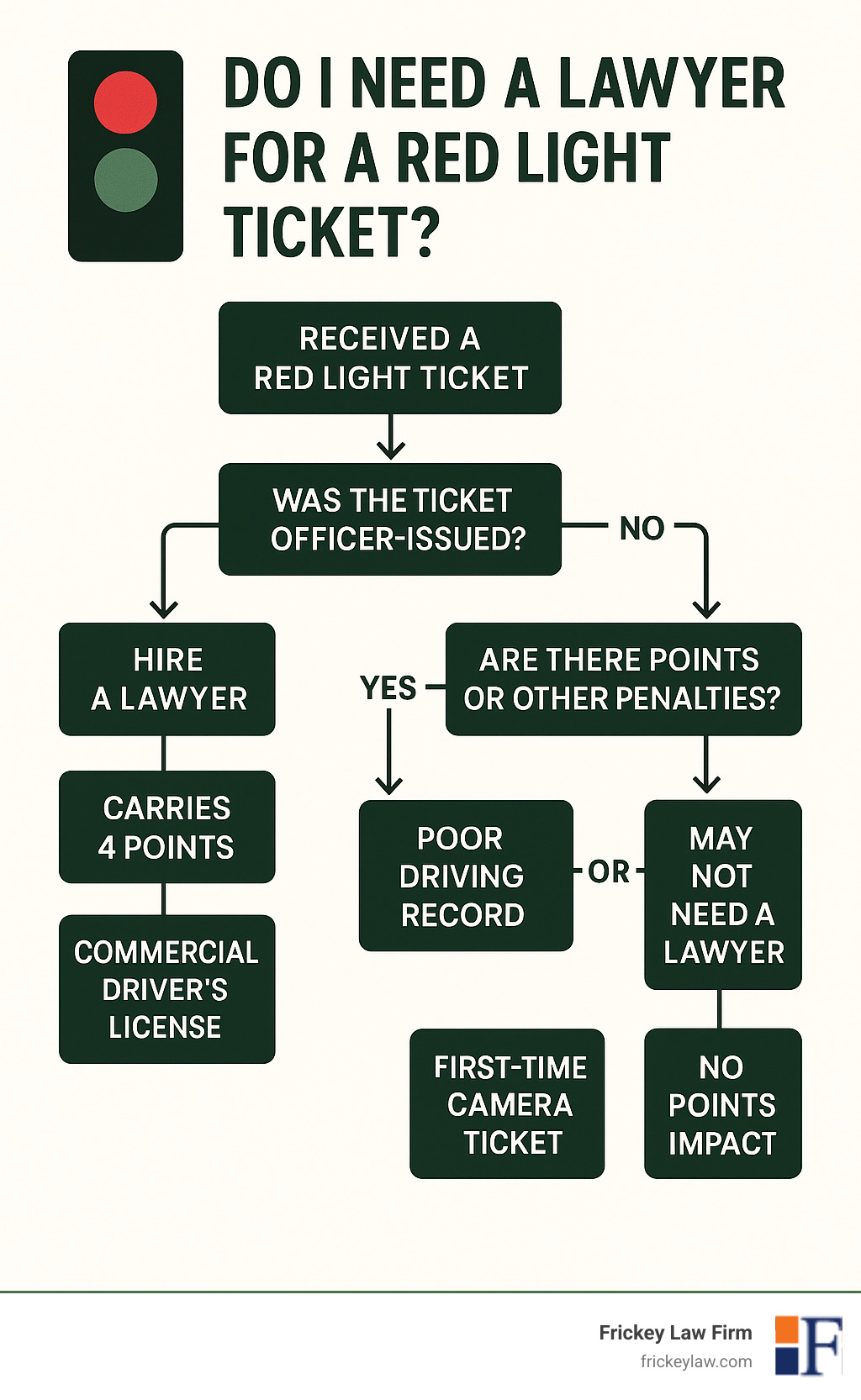
Do I need a lawyer for a red light ticket? The answer depends on your specific situation:
| Lawyer Recommended | May Not Need a Lawyer |
|---|---|
| ✓ Officer-issued ticket (carries 4 points) | ✓ First-time camera ticket with clear photo |
| ✓ Commercial driver’s license at risk | ✓ Willing to pay fine and take traffic course |
| ✓ Multiple recent violations | ✓ Simple camera ticket with no points |
| ✓ Accident involved with the violation | ✓ Eligible for traffic school option |
| ✓ Facing license suspension | ✓ Clear case of mistaken identity/wrong driver |
Getting that dreaded red light ticket in the mail or being pulled over at an intersection can ruin your day. While a simple camera ticket might seem like just another bill to pay, the decision to fight it or hire legal help can have significant consequences for your driving record, insurance rates, and even your career if you drive professionally.
The impact varies dramatically between officer-issued tickets (which typically carry 4 points in many states) and camera tickets (often treated as civil infractions with no points). Your driving history, license type, and whether you were actually driving also play crucial roles in determining your best course of action.
I’m Michael Frickey, a Board Certified Specialist in Criminal Law with extensive experience handling red light ticket cases throughout Raleigh and North Carolina. I’ve helped hundreds of clients evaluate whether they need a lawyer for a red light ticket based on their unique circumstances and potential consequences.
Red Light Tickets 101: Officer vs Camera
Before deciding if you need legal help, let’s break down the key differences between the two types of red light tickets you might find yourself facing.
Running a red light happens when you enter an intersection after the traffic signal has turned red. In North Carolina and most states, this is considered a traffic violation because it puts everyone’s safety at risk.
But not all red light tickets are created equal. The way you get caught makes a huge difference in what happens next:
| Feature | Officer-Issued Ticket | Camera-Issued Ticket |
|---|---|---|
| Legal Classification | Moving violation | Civil infraction in most jurisdictions |
| Points on License | Typically 4 points | Usually 0 points |
| Insurance Impact | Can increase rates 20-45% | Generally none if paid promptly |
| Issuing Authority | Police officer | Automated system |
| Evidence Type | Officer testimony | Photographic/video |
| Contest Process | Court appearance | Administrative hearing |
| Typical Fine | $100-$500 | $100-$262 |
How Red Light Cameras Work
Those silent sentinels perched above intersections are more sophisticated than they appear:
Red light cameras use advanced technology that works like a patient, never-blinking traffic cop. When you approach an intersection, in-road sensors or radar technology detect your vehicle’s presence and speed. If the light turns red and you cross that white stop line anyway, the system springs into action.
The camera captures multiple high-resolution photos or video showing your vehicle before entering the intersection with the red light visible, your car in the intersection while the light is red, and a close-up of your license plate (just in case you were wondering how they know it’s you).
A few weeks later, the registered owner of the vehicle—not necessarily the driver—receives a surprise in the mail. This citation includes the photos, violation details, and payment instructions.
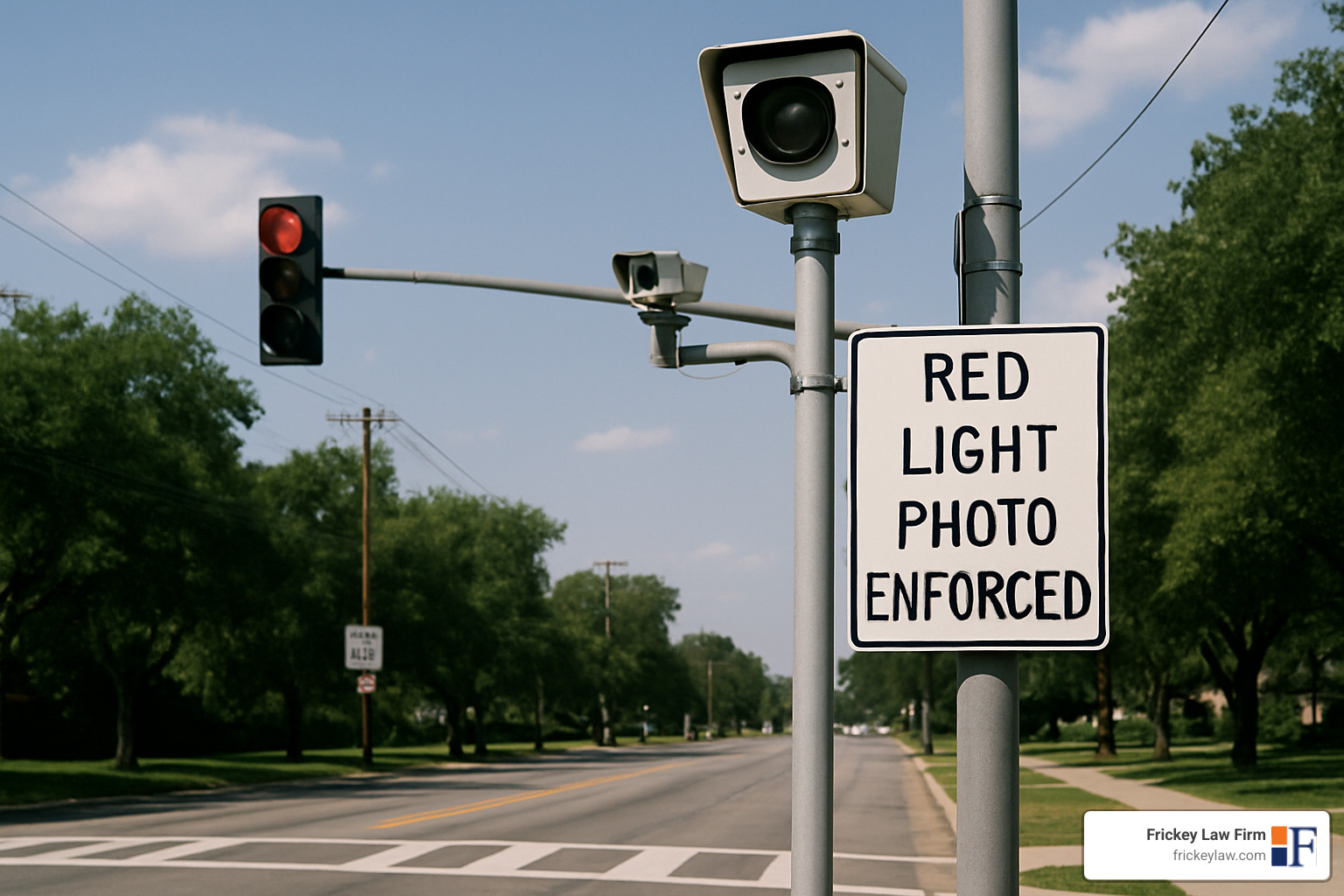
In North Carolina and many states, the law requires clear signage warning drivers about these cameras. You’ve probably seen those “Photo Enforced” signs at intersections—they’re not just there to spook you, they’re legally required.
The numbers tell an interesting story: Florida alone processed 253,500 red light camera violations in 2023—a 29% jump from 2021. This trend is happening in North Carolina too, as more cities accept automated enforcement.
For specific regulations on how the automated process works in some jurisdictions, you can check resources like the Automated Process information page.
What an Officer-Issued Ticket Looks Like
Getting a red light ticket from an actual police officer is a very different experience:
Instead of finding out weeks later in your mailbox, you’ll know immediately when those red and blue lights flash in your rearview mirror. Your heart sinks as you pull over, knowing exactly why you’re being stopped.
The officer approaches your window and asks for your license, registration, and insurance. They’ll explain that they personally witnessed you running the red light. Unlike the camera, which only captures your vehicle, the officer sees you behind the wheel.
You’ll receive a physical citation on the spot, complete with court date information and instructions. This face-to-face interaction creates a legal record of the stop that’s very different from an automated camera ticket.
If you decide to contest the ticket, the officer must appear in court to testify about what they saw. Their testimony, possibly supported by body camera footage, becomes the primary evidence against you.
Do I need a lawyer for a red light ticket in this situation? When an officer issues the ticket, you’re facing a true moving violation with points on your license—not just a civil fine. This makes the stakes significantly higher and legal representation potentially more valuable.
Penalties, Points & Insurance Fallout
That red light ticket sitting on your kitchen counter might seem like a simple fine to pay and forget – but the true cost can be much steeper than you imagine. Let’s pull back the curtain on what’s really at stake for your wallet and driving record.
Camera Tickets: Record & Insurance
When that dreaded envelope arrives with photos of your car crossing an intersection, there’s actually some good news:
Camera tickets typically fly under the radar when it comes to your driving record. In most places, including North Carolina, these automated citations are treated as civil matters – more like a parking ticket than a serious driving offense.
The biggest perk? No points on your license in most states if you pay promptly. Your insurance company likely won’t ever know about it during routine policy checks, keeping your premiums stable.
That said, camera tickets aren’t without teeth. Ignore one, and you might find yourself unable to renew your vehicle registration when the time comes. And watch out for those right-on-red citations – many cameras catch drivers who roll through rather than coming to a complete stop, something officers rarely enforce but cameras love to capture.
Looking at Florida as an example, a camera ticket starts at $158, but procrastinate on payment and that jumps to $262 – plus the potential for points if you delay too long. Not exactly pocket change!
Officer Tickets: The Hidden Costs
Getting pulled over by an officer for running a red light is a whole different ballgame – and the rules are much less forgiving:
Most states, including North Carolina, will slap 4 points on your driving record for an officer-issued red light ticket. Those points aren’t just numbers – they translate directly into dollars.
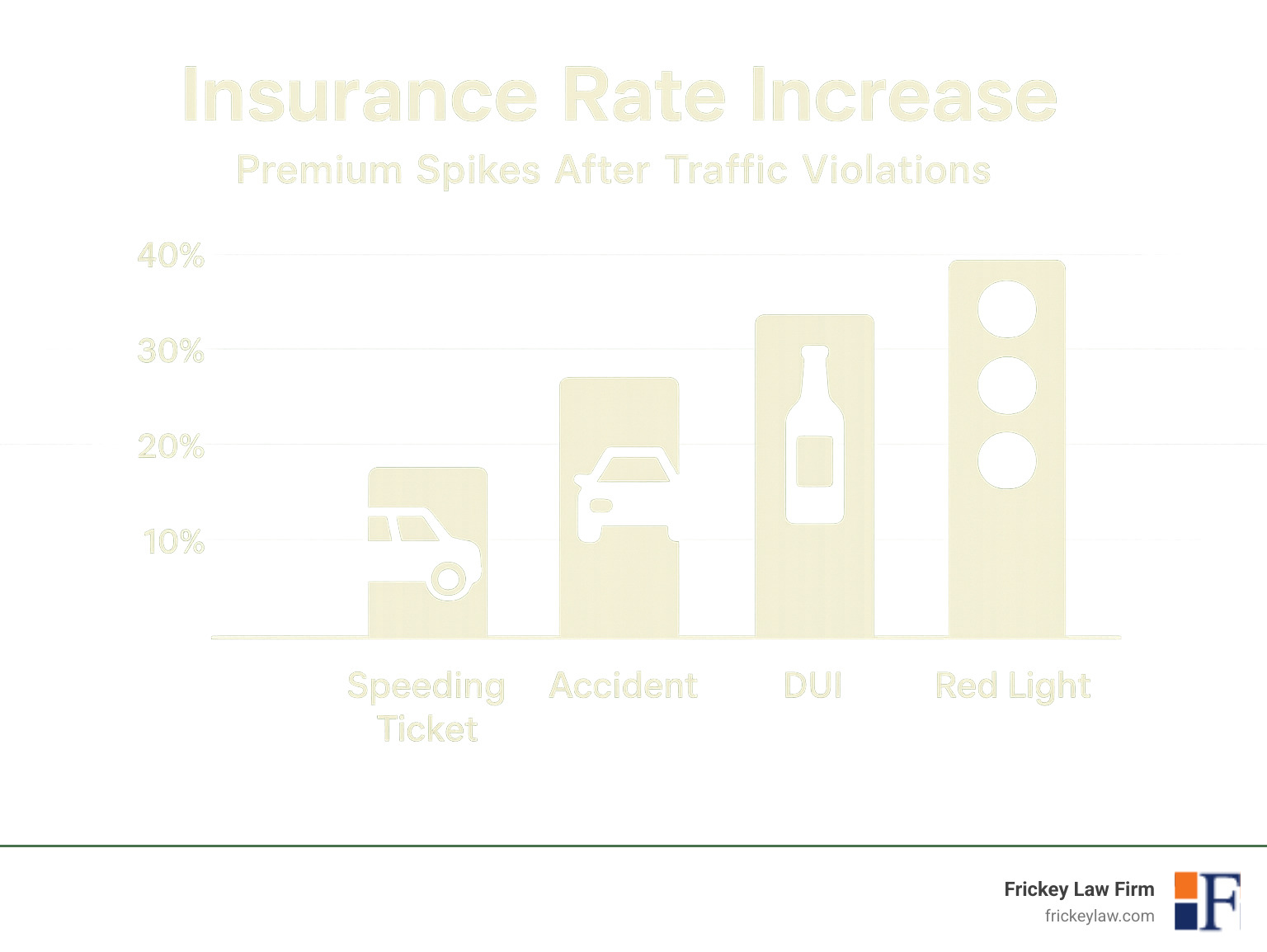
The real pain comes at insurance renewal time. A single red light violation can trigger a 20-45% premium increase that haunts you for three years. Do the math on your current premium, and you’ll quickly see how a $100-500 ticket balloons into thousands over time.
For drivers already walking a tightrope with previous violations, those 4 points could push you over the edge. In North Carolina, accumulate 12 points in three years, and you’re looking at a suspended license – and all the headaches that come with it.
Commercial drivers face even steeper consequences. Many states count violations as 1.5 times the normal point value for CDL holders, putting their livelihood directly in the crosshairs. When your license is your paycheck, do I need a lawyer for a red light ticket becomes a much more urgent question.
To add insult to injury, many states now require completion of a driver improvement course after paying a red light ticket. Since 2009, Florida has mandated these courses – adding both time out of your schedule and additional fees to the equation.
The bottom line? That “simple” red light ticket can cascade into a years-long financial drain that far exceeds the initial fine amount. Understanding these real costs is crucial when deciding whether to pay up, fight it yourself, or bring in professional legal help.
Do I Need a Lawyer for a Red Light Ticket? The Decision Matrix
When that red light ticket arrives in your mailbox (or gets handed to you through your car window), the question immediately pops up: do I need a lawyer for a red light ticket? It’s not always a straightforward yes or no. Let’s walk through a practical framework to help you make the right call for your specific situation.

Do I need a lawyer for a red light ticket—Key Situations Yes
You’ll definitely want to consider legal help if you’re in one of these higher-stakes scenarios:
Your license is hanging by a thread. If you’re already close to your state’s point threshold for suspension (that’s 12 points in a three-year period here in North Carolina), even one more violation could leave you without driving privileges. That’s when professional help becomes invaluable.
You drive for a living. For CDL holders, points aren’t just annoying—they’re career-threatening. A good traffic attorney understands the special regulations commercial drivers face and can fight to protect your livelihood.
There was a crash involved. Red light tickets that come with accident reports bring extra complications: potential civil liability, insurance claims, and possibly improved penalties. These cases almost always benefit from legal expertise.
The evidence looks shaky. Maybe the camera image is blurry, the timestamp seems off, or the officer’s view was obstructed. When there’s room to question the evidence, a lawyer can spot technical deficiencies that might lead to dismissal.
You’ve missed important deadlines. If you’ve already blown past the response window, you need help navigating the system to avoid additional consequences like license suspension or being unable to renew your registration. An attorney can often reopen communication channels that seem closed to the average driver.
Do I need a lawyer for a red light ticket—When DIY Might Suffice
In some situations, handling it yourself might make more sense:
It’s your first camera ticket and your record is spotless. For a straightforward camera violation with no points attached, simply paying the fine might be the most practical approach, especially with a clean driving history.
Traffic school is an option for you. Many jurisdictions let first-time or occasional offenders attend a defensive driving course instead of taking the points. If you qualify, this can be a straightforward DIY solution that avoids long-term consequences.
Someone else was driving your car. Camera tickets go to the vehicle owner, not necessarily the driver. Most jurisdictions allow you to submit an affidavit identifying who was actually behind the wheel. This paperwork process rarely requires legal assistance.
The fine is small with no points involved. When the ticket carries a minimal financial penalty and won’t affect your driving record, the math simply might not justify hiring representation.
The evidence is crystal clear. If there’s undeniable photographic proof showing your vehicle running a red light and you have no valid defense, fighting the ticket might just waste your time and money.
Gray Areas: Ask These Questions
For those in-between situations where the answer isn’t obvious, consider these factors:
How strong is the evidence against you? Take time to carefully review any photos or videos. Are there technical issues like unclear images or improper signage that could support dismissal?
What’s the real cost comparison? Don’t just look at the ticket fine—calculate potential insurance increases over 3+ years versus the cost of legal help. Sometimes paying more upfront saves significantly in the long run.
Do you already have legal coverage? Some employers, unions, or even credit card perks include legal services that cover traffic violations. If you’re already paying for this benefit, using it makes perfect sense.
What’s the local court’s reputation? Courts and judges vary widely in how they handle traffic cases. In some jurisdictions, having representation dramatically improves your odds of a favorable outcome.
How valuable is your time? Fighting a ticket yourself means taking time off work for court appearances—sometimes multiple times. Factor in your hourly worth when making your decision.
The right choice ultimately depends on your specific circumstances, driving record, and what’s at stake. For personalized guidance on your red light ticket situation, consider the steps to take after receiving a traffic ticket to make an informed decision that protects both your driving privileges and your wallet.
Lawyer Up or Pay Up: Costs, Defenses & Value
When that red light ticket arrives, you’re faced with a crucial decision: handle it yourself or bring in professional help? Understanding what you’re really paying for—and what you might save—makes all the difference.
What a Traffic Lawyer Actually Does
Behind the scenes, traffic attorneys do far more than just show up in court wearing a suit. They’re your personal navigation system through a complex legal landscape.
Your time stays yours. Perhaps the most immediate benefit is that your attorney appears in court on your behalf. No taking time off work, no navigating an unfamiliar courthouse, no waiting on hard benches for hours as your case crawls up the docket.
When your attorney reviews your red light ticket case, they’re examining it through an expert lens. They’ll scrutinize whether proper signage was in place, check if the camera was properly calibrated and maintained, verify the yellow light timing met minimum standards, and assess if the images clearly identify both your license plate and you as the driver.
Traffic courts have their own rhythm and relationships that outsiders simply don’t understand. Your attorney brings procedural expertise and familiarity with local court personnel—knowing which prosecutors are willing to negotiate and which judges are strict on certain violations can make all the difference.
Most people don’t realize that the vast majority of traffic cases never go to trial. They’re resolved through strategic negotiations where experienced attorneys can often secure reduced charges or penalties based on their understanding of what prosecutors are willing to accept.
In some cases, attorneys can even challenge the fundamental legality of your stop or the entire camera program itself based on the Fourth Amendment of the Constitution, which protects against unreasonable searches and seizures—a complex legal argument most drivers wouldn’t know how to make.
Cost-Benefit Snapshot

When considering whether you need a lawyer for a red light ticket, the math often tells a compelling story.
Going it alone means facing not just the immediate fine ($158-$500 depending on where you live), but potentially a much costlier insurance hike. Those 4 points from an officer-issued ticket typically trigger a 22-45% premium increase that haunts you for three years. Add in lost wages from taking time off for court appearances ($100-$300+), possible license reinstatement fees if points lead to suspension ($50-$100), and mandatory traffic school costs in some jurisdictions ($25-$100).
With legal representation, you’re investing in experience that can potentially eliminate or reduce these costs. The attorney fee is a one-time expense, while the insurance increase is a gift that keeps on taking—for 36 long months. Many drivers don’t realize that the long-term savings from avoiding just the insurance increase often exceeds what they’ll pay for quality representation.
What’s harder to quantify but equally valuable is peace of mind. Knowing a professional is handling your case means one less worry on your plate. For commercial drivers or those with existing points on their record, this peace of mind—and protection of your driving privileges—can be priceless.
As one client recently shared after we handled their red light ticket case: “I was ready to just pay the fine until I calculated what three years of increased insurance would cost me. Hiring a lawyer saved me over $800 in the long run, not to mention the points on my record.”
When weighing whether you need a lawyer for a red light ticket, the visible fine is often just the tip of a much larger financial iceberg. A skilled traffic attorney from Frickey Law Firm doesn’t just fight your ticket—they protect your financial future and driving record for years to come.
Next Steps, Prevention Tips & FAQs
If you’ve received a red light ticket, here’s what to do next:
- Don’t ignore it! Failing to respond to a ticket within the specified timeframe (typically 30 days) can result in additional penalties, including license suspension.
- Examine the evidence carefully. Look for any issues with the photos, timing, or identification that could form the basis of a defense.
- Consider your driving record. Check your current point total to understand how this ticket might affect your license status.
- Request a hearing if appropriate. This preserves your right to contest the ticket while you decide whether to hire representation.
- Consult with a traffic attorney. Many offer free initial consultations to evaluate your case.
To prevent future red light tickets:
- Approach intersections with caution, especially when the light has been green for a while.
- Don’t rush yellow lights. If you’re uncertain whether you can clear the intersection before the light turns red, it’s safer to stop.
- Come to a complete stop before turning right on red. Rolling right turns are a common source of camera tickets.
- Consider using traffic apps that warn about red light camera locations.
- Maintain proper following distance so you can stop safely when lights change.
Frequently Asked Questions
1. Will ignoring the ticket suspend my license?
Yes, ignoring a red light ticket—whether camera or officer-issued—can lead to license suspension in most states. For camera tickets, the path typically involves unpaid fines escalating to registration holds and eventually to suspension. For officer-issued tickets, failure to respond is often treated as an admission of guilt, resulting in automatic conviction, points, and potential suspension.
2. Can multiple camera tickets arrive at once?
Unfortunately, yes. In some Florida cities, multiple red light camera tickets can be issued before the driver is even aware, leading to fines totaling thousands of dollars. The system photographs and processes violations independently, so you might receive several tickets days or weeks apart, all before receiving the first one in the mail.
3. What if I wasn’t the driver but missed the affidavit deadline?
If you weren’t driving when the camera ticket was issued but missed the deadline to submit an affidavit identifying the actual driver, you may need legal assistance. In many jurisdictions, there are procedures for late submissions with proper justification. A lawyer can help you steer this process and potentially avoid being held responsible for someone else’s violation.
Conclusion: Making Your Informed Decision
That red light ticket sitting on your counter represents more than just a fine—it’s a decision point that could affect your driving record, insurance rates, and even your career. After walking through all the factors, you’re now equipped to make the right call for your specific situation.
Think of your decision as a personal equation with several key variables:
The type of ticket makes an enormous difference. Those officer-issued citations carry the weight of points and potential insurance hikes, while camera tickets are often simpler civil infractions. Your driving history matters too—a spotless record gives you different options than someone already accumulating points. And let’s not forget your license type—CDL holders simply can’t afford the same risks as everyday drivers.
For many folks with clean records facing a first-time camera ticket, simply paying the fine and moving on might be the most sensible path. There’s no shame in taking the straightforward approach when the consequences are minimal.
But if you’re staring down license points, insurance premium spikes, or have special circumstances like a commercial license, investing in legal help often pays dividends. Do I need a lawyer for a red light ticket in these situations? The math usually says yes—the long-term savings typically outweigh the upfront legal costs.
At The Frickey Law Firm, we see each case as unique as a fingerprint. Our board-certified specialists take the time to evaluate your specific situation rather than offering one-size-fits-all advice. Whether you need comprehensive representation to fight your ticket or just clear guidance on handling it yourself, we’re here to help fellow Raleigh residents steer the often confusing world of traffic law.
The true cost of that red light ticket stretches far beyond the initial fine amount. By understanding all your options and the real long-term implications, you can make a choice that protects both your driving privileges and your financial wellbeing for years to come.
Don’t let a momentary traffic mistake follow you longer than necessary. Visit our Red Light Violations page to learn how we can help you minimize the impact of your citation and get back to the road with confidence.
