
Finding the Right Legal Help After a Workplace Injury
Looking for a workers compensation attorney near me? Here’s what you need to know:
- Local knowledge matters: Attorneys familiar with your state’s laws and local courts can handle claims more effectively
- Free consultations: Most workers’ comp attorneys offer free case evaluations
- Contingency fees: Typically 15–25% of your settlement (no upfront costs)
- When to hire: Consider legal help if your claim is denied, benefits are delayed, or your injury is severe
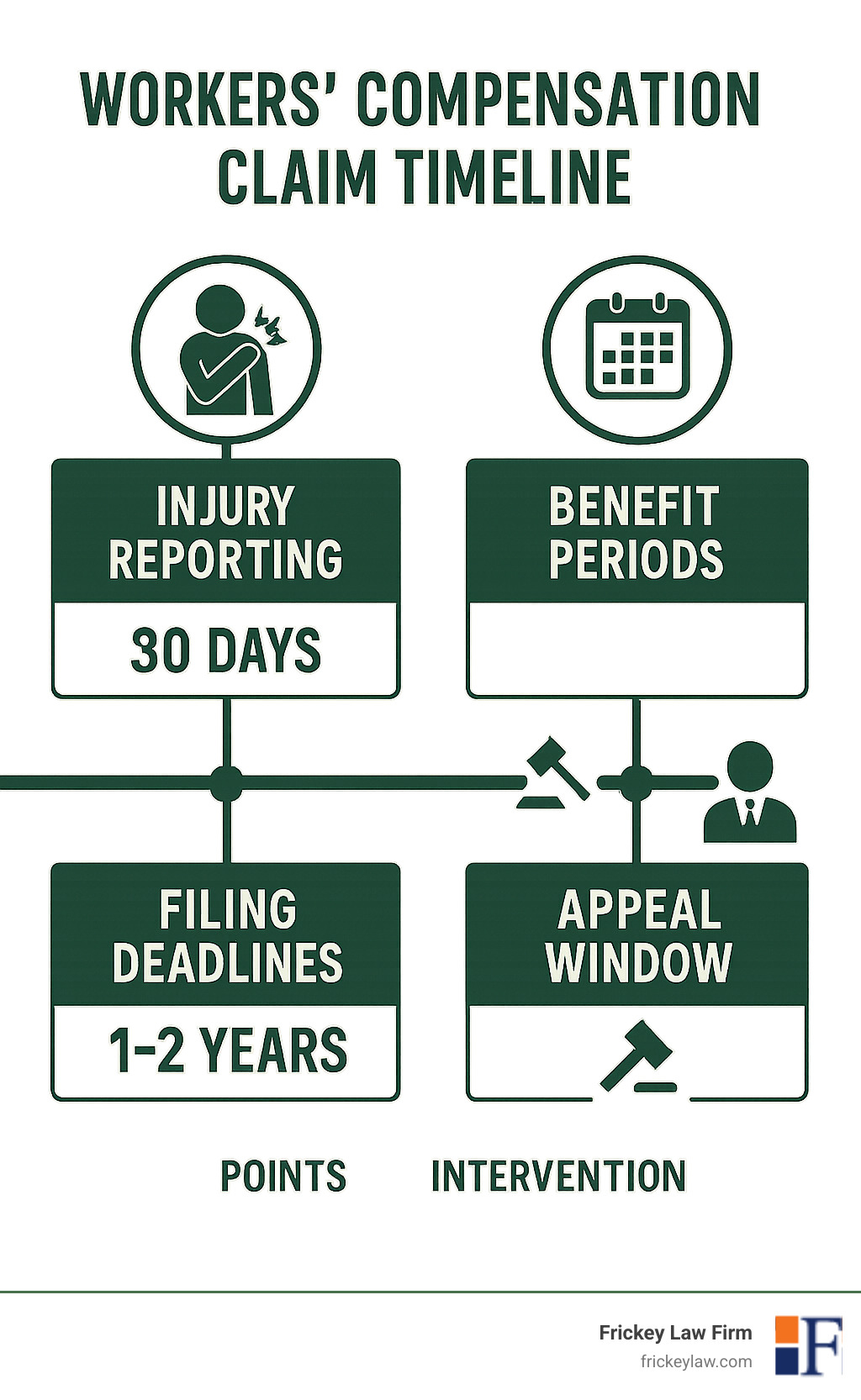
- Deadlines: In most states, you must report injuries within 30 days and file claims within 1–2 years
A workers compensation attorney near me can make all the difference when you’re dealing with a workplace injury. The system that’s supposed to help injured workers can quickly become overwhelming, especially when you’re trying to recover physically and financially at the same time.
Workers’ compensation is a no-fault insurance system designed to cover medical expenses and replace lost wages when you’re hurt on the job. But insurance companies often work to minimize payouts, employers might dispute claims, and the paperwork alone can be daunting.
Local attorneys understand the specific laws in your state, have relationships with local judges and medical providers, and can meet with you face-to-face to guide you through this difficult process.
I’m Michael Frickey, a Board-Certified attorney with extensive experience helping injured workers steer the complex workers’ compensation system in North Carolina, and I’ve seen how having a workers compensation attorney near me can dramatically improve outcomes for my clients.
Understanding Workers’ Compensation Basics
Think of workers’ compensation as a safety net designed to catch you when you’re injured at work. It’s insurance that most employers must carry to protect their employees – and in North Carolina, any business with four or more employees must provide this coverage. Construction companies need coverage even with just one employee.
What makes workers’ comp unique is its “no-fault” nature. You don’t need to prove your boss did something wrong to receive benefits. You get hurt on the job? You’re covered – regardless of who caused the accident. In exchange for these guaranteed benefits, you typically give up the right to sue your employer directly for the injury (though we’ll talk about some exceptions later).
Timing is everything with workers’ compensation. In North Carolina, you must report your workplace injury within 30 days of it happening. Miss this deadline, and you might lose your right to benefits – something a workers compensation attorney near me can help you steer.
Here’s some good news: workers’ compensation benefits aren’t subject to federal income tax. North Carolina also exempts these benefits from state income tax, so most injured workers receive their weekly checks tax-free, according to federal tax code.
Covered Injuries & Illnesses
Workers’ compensation covers more than just dramatic accidents. Here’s what’s typically covered:
Traumatic injuries happen in an instant – like when you fall off a ladder, get hit by falling objects, or are injured in a car crash while on company business.
Repetitive stress injuries develop over time. That wrist pain from years of typing? That’s carpal tunnel syndrome, and it’s covered. So are tennis elbow and back problems from repeated lifting.
Occupational diseases result from workplace exposure – like respiratory problems from chemical exposure or hearing loss from working in noisy environments.
Pre-existing condition aggravation is also covered. If your bad knee gets worse because of your job duties, that worsening may be compensable, even if the original knee problem wasn’t work-related.
Psychological injuries like PTSD may be covered if they develop after a physical workplace injury or due to extraordinary work conditions.
One important exception: injuries during your regular commute generally aren’t covered (the “coming and going” rule). However, if you’re driving a company vehicle or traveling for work purposes, you might still be protected.

Benefits You May Receive
When you’re hurt on the job, workers’ compensation provides several types of benefits to help you recover and stay financially afloat:
Medical benefits cover all reasonable and necessary treatment related to your work injury. Doctor visits, surgeries, hospital stays, medications, physical therapy, and even medical equipment – it’s all covered as long as it’s needed for your recovery.
Temporary Total Disability (TTD) kicks in when you’re completely unable to work during recovery. You’ll receive wage replacement equal to two-thirds (66.67%) of your average weekly wage if you’re single, or 75% if you have dependents. In North Carolina, these benefits can last up to 104 weeks (two years), though extensions are possible in certain situations.
Temporary Partial Disability (TPD) helps when you can work during recovery, but earn less due to restrictions. These benefits make up part of the difference between your pre-injury and current wages.
Permanent Partial Disability (PPD) compensates you for permanent impairment to specific body parts, based on your doctor’s impairment rating. Each body part has a “schedule” of weeks that determines your compensation.
Permanent Total Disability (PTD) provides long-term benefits if your injuries leave you permanently unable to return to any gainful employment.
Vocational rehabilitation services help you return to suitable employment if you can’t go back to your previous job.
Death benefits provide compensation to dependents if a workplace injury or illness results in death, including funeral and burial expenses.
| Benefit Type | Description | Duration | Payment Rate |
|---|---|---|---|
| Temporary Total Disability (TTD) | When completely unable to work | Up to 104 weeks (extendable) | 66.67% of average weekly wage (75% with dependents) |
| Permanent Partial Disability (PPD) | Compensation for permanent impairment | Based on body part and impairment rating | Based on impairment rating and body part schedule |
A workers compensation attorney near me can help ensure you receive all the benefits you’re entitled to under North Carolina law, especially when insurance companies try to minimize your claim.
When & Why to Hire a Workers Compensation Attorney Near Me
Navigating the workers’ compensation system can feel like trying to find your way through a maze – while injured and stressed. Though some claims go smoothly, many injured workers find they need professional help. Here’s when having a workers compensation attorney near me becomes not just helpful, but necessary:
You should consider reaching out to a local attorney when your claim hits roadblocks. Insurance companies often deny legitimate claims, hoping you’ll simply give up rather than fight back. If your benefits are arriving late or suddenly stop altogether, that’s another red flag that professional help could make all the difference.
Serious injuries add another layer of complexity. If you’re facing surgeries, permanent disability, or need long-term care, insurance companies fight harder to minimize these higher-value claims. The same applies if your employer is disputing whether your injury happened at work or questioning its severity.
Have you experienced negative treatment after filing your claim? Workplace retaliation – whether through demotion, reduced hours, or termination – is unfortunately common, and a local attorney can help protect your rights and livelihood.
When settlement offers arrive, having someone who understands the true value of your claim becomes crucial. Many injured workers accept settlements that don’t adequately cover their future medical needs or lost earning potential.
Cases involving pre-existing conditions are particularly challenging, as insurers often attribute your current problems to past injuries rather than your workplace accident. Similarly, if you might qualify for additional benefits like Social Security Disability, the interaction between different benefit systems requires expert guidance.
If someone besides your employer contributed to your injury – like a negligent contractor or equipment manufacturer – you may have additional claims worth pursuing. And when facing critical stages like hearings or mediations, having representation dramatically improves your chances of success.
Most workers compensation attorneys near me work on contingency, meaning they only get paid if you win. In North Carolina, attorney fees in these cases are regulated, typically around 25% of the benefits recovered – a small price to pay for proper representation and peace of mind.
Benefits of Hiring a workers compensation attorney near me
The numbers don’t lie – injured workers with attorneys consistently receive higher settlements and more favorable outcomes than those going it alone. Why? Because a good workers compensation attorney near me brings several crucial advantages to your case.
First and foremost, attorneys understand what your claim is truly worth. They consider not just current medical bills but future needs and the full extent of your disability. While you focus on healing, they handle all paperwork and deadlines, ensuring nothing falls through the cracks that could derail your claim.
Your attorney works closely with your healthcare providers to develop strong medical evidence supporting your case. When it’s time to negotiate, you’ll have an experienced professional facing off against insurance adjusters who otherwise negotiate claims every day against unrepresented injured workers.
If your case proceeds to a hearing, having an attorney who knows the local judges and procedures becomes invaluable. They recognize and counter common insurance company tactics designed to minimize your benefits.
A workers compensation attorney near me brings specific knowledge of North Carolina laws and local judicial tendencies that can make or break your case. Perhaps most importantly, they take the overwhelming legal burden off your shoulders during a time when your energy should be focused on recovery.
At the Frickey Law Firm, we’ve witnessed countless situations where our intervention transformed denied claims into substantial benefits, or converted inadequate settlement offers into fair compensation that truly reflected our clients’ needs.
Red Flags When Choosing a workers compensation attorney near me
Finding the right attorney matters – and spotting the wrong one early can save you significant headaches. Be cautious of attorneys making unrealistic promises about outcomes or specific settlement amounts. Ethical attorneys provide realistic expectations, not guarantees.
Specialization matters in workers’ compensation law. An attorney who handles these cases occasionally as part of a broader practice likely lacks the deep expertise of someone focused primarily on workers’ comp cases. Pay attention to communication patterns from the start – if an attorney or their staff is hard to reach during your initial consultation, this problem typically persists throughout your case.
Some firms take on too many clients, leaving little attention for individual cases. Don’t hesitate to ask about typical caseloads. While most attorneys work on contingency, the fee structure and potential costs should be clearly explained upfront, with no surprises.
Local experience makes a significant difference. An attorney unfamiliar with local workers’ compensation judges and procedures may struggle to steer the system effectively. Be wary of pressuring tactics urging you to sign immediately without thoroughly understanding your options.
Established attorneys should have satisfied clients willing to share their positive experiences. If an attorney can’t provide testimonials or references, consider it a potential warning sign.
The right workers compensation attorney near me can transform your experience with the workers’ compensation system, turning a frustrating process into one where you feel supported, informed, and confident that someone is truly fighting for your best interests. More info about attorney services
How to Find and Choose the Best Local Attorney
Finding the right workers compensation attorney near me shouldn’t feel overwhelming, even when you’re already dealing with an injury. Think of your search as building a relationship with someone who’ll guide you through a challenging time in your life.
Start by asking people you trust. Your friends, family members, or coworkers who’ve been through similar situations can offer honest insights about their experiences—both good and bad. These personal recommendations often lead to the most satisfying attorney relationships.
The North Carolina Bar Association maintains directories of attorneys specializing in workers’ compensation law. This official resource helps narrow your search to professionals with the right expertise for your situation.
Look for attorneys who’ve gone the extra mile in their professional development. In North Carolina, attorneys can become board-certified specialists in workers’ compensation law—a credential that signals advanced knowledge and experience in this specific field. Board certification isn’t just a fancy title; it means the attorney has demonstrated exceptional expertise.
While online reviews shouldn’t be your only deciding factor, they can reveal patterns worth noting. Are multiple clients mentioning the same strengths or concerns? These patterns often tell you more than any single review could.
Most workers compensation attorneys near me offer free initial consultations, which serve as informal interviews. Pay attention to how comfortable you feel explaining your situation and how clearly they explain complex legal concepts. A good attorney makes you feel heard, not rushed.
During your consultation, ask specifically about their experience with the North Carolina Industrial Commission and local hearing officers. An attorney who regularly appears before the same judges handling your case brings valuable insights about what approaches work best.
The Frickey Law Firm in Raleigh brings board-certified expertise and deep connections within North Carolina’s workers’ compensation system. Our established relationships with local judges, medical providers, and insurance adjusters create practical advantages for our clients that can’t be found in law books.
Questions to Ask During Consultation
Your consultation is your opportunity to determine if an attorney is right for you. Here are questions that reveal what you really need to know:
“How much of your practice focuses on workers’ compensation?” You want someone who lives and breathes workers’ comp law, not someone who handles these cases occasionally.
“Have you handled injuries like mine before?” An attorney familiar with your specific type of injury will better understand the medical aspects and typical recovery patterns.
“What’s your approach to my situation?” Listen for a thoughtful analysis rather than generic promises. A good attorney will explain potential strategies and challenges specific to your case.
“Who will I be working with day-to-day?” Some firms have the senior attorney handle the consultation, then assign your case to others. Know who will actually be managing your claim.
“How will we stay in touch about my case?” Clear communication expectations prevent frustration later. Will they return calls within 24 hours? Do they prefer email or phone?
Also ask about their fee structure, potential obstacles they foresee, realistic timelines, whether they’ll personally represent you at all proceedings, and examples of results in similar cases.
Third-Party Lawsuits & Dual Claims
While workers’ compensation typically prevents you from suing your employer, there are situations where you might have additional claims that could significantly increase your compensation.
If someone other than your employer or coworker contributed to your injury, you might have what’s called a “third-party claim.” For example, if you’re making deliveries and another driver hits your vehicle, you’d have both a workers’ comp claim and a personal injury claim against the other driver.
Defective equipment cases open another avenue. If machinery malfunctioned and caused your injury, the manufacturer might be liable through a product liability claim alongside your workers’ comp case.
Property owners may be responsible if you’re working on someone else’s property and unsafe conditions cause your injury. This premises liability claim exists separately from your workers’ compensation benefits.
In rare situations involving intentional harm rather than negligence, you might have additional legal options beyond standard workers’ compensation.
These dual-track claims are valuable because personal injury claims, unlike workers’ compensation, allow recovery for pain and suffering and don’t cap wage loss at two-thirds of your salary. However, they’re also complex because your workers’ compensation insurer may place a lien against your third-party recovery to recoup benefits they’ve paid.
A skilled workers compensation attorney near me understands how to coordinate these overlapping claims to maximize your total recovery while navigating the technical legal requirements of each. The scientific research on third-party claims shows how these legal principles have developed to protect workers while maintaining the workers’ compensation system.
Filing & Maximizing Your Claim Step-by-Step
Navigating the workers’ compensation process doesn’t have to feel like solving a puzzle in the dark. Let me walk you through exactly what to do after a workplace injury to protect your rights and maximize your benefits.
First things first: report your injury immediately to your supervisor. In North Carolina, you have 30 days to notify your employer, but why wait? The sooner you report it, the stronger your claim. A simple email creating a paper trail can make all the difference later.
After reporting, seek medical attention right away. In workers’ comp cases, your employer or their insurance company typically controls your medical care. They’ll direct you to specific providers, though you can request a change if you have concerns about your treatment.
Within two years of your injury, you’ll need to file Form 18 with the North Carolina Industrial Commission. This formal claim document establishes your case officially. While it might seem straightforward, even small errors can lead to delays or denials—this is where having a workers compensation attorney near me can save you significant headaches.
Throughout your recovery, document everything carefully. Keep a journal of your symptoms, how your injury affects your daily life, and any conversations with your employer or their insurance company. These details often fade from memory but can prove crucial to your case.
Your doctor’s orders aren’t just medical advice—they’re legal protection. Following medical recommendations precisely shows you’re committed to recovery and prevents insurance companies from claiming you’re prolonging your disability.
Be extremely cautious with recorded statements. Insurance adjusters often request these early in the process when you’re still in pain or on medication. Their friendly demeanor masks their goal: finding inconsistencies to minimize your claim. Always consult with your attorney before providing any recorded statement.
If the insurance company schedules an Independent Medical Examination (IME), understand this doctor works for them, not you. These exams often result in opinions that favor the insurer. Your attorney can prepare you for what to expect and potentially attend with you to ensure fairness.
Never accept a settlement offer without professional review. Insurance companies typically start with lowball offers that don’t account for future medical needs or complications. An experienced workers compensation attorney near me can assess whether an offer truly covers your long-term needs.
If your claim faces resistance, prepare thoroughly for hearings before the North Carolina Industrial Commission. Your attorney will gather medical evidence, secure expert testimony, prepare witnesses, and develop compelling arguments to support your case.
Common Mistakes to Avoid
I’ve seen countless injured workers unknowingly damage their own claims. Don’t let these common pitfalls derail your case:
Delayed reporting creates immediate suspicion. When you wait days or weeks to report an injury, employers and insurers naturally question whether it actually happened at work. Even if you think an injury is minor, report it—you can always close the claim if it resolves quickly.
Your medical appointments aren’t optional. Missing doctor visits sends a powerful negative message about the seriousness of your condition. Insurance companies track attendance closely, and unexplained absences can lead to benefit termination.
Be completely honest with your doctors about your symptoms and limitations—but don’t minimize them. Some clients, especially those who pride themselves on toughness, downplay their pain. This almost always backfires when medical records don’t reflect the true severity of your condition.
Social media can damage your claim. That fishing trip or dance party video might seem innocent to you, but insurance companies regularly monitor claimants’ social accounts looking for evidence to contradict disability claims. Consider taking a social media break during your case.
Returning to work prematurely often leads to reinjury and complicated claims. Listen to your body and your doctor, not your financial worries or workplace pressure. The workers’ compensation system exists precisely to provide income while you properly heal.
Understanding and respecting your work restrictions protects both your health and your legal rights. Get written restrictions from your doctor, provide them to your employer, and politely but firmly decline tasks that exceed these limitations.
Appealing a Denial
Receiving a denial letter can feel devastating, but it’s actually just the beginning of the process. Many successful claims start with a denial. Here’s how to fight back effectively:
First, carefully review the denial reason. Is the insurer claiming your injury wasn’t work-related? That you missed a deadline? That your treatment isn’t medically necessary? Understanding exactly why they denied your claim helps formulate your appeal strategy.
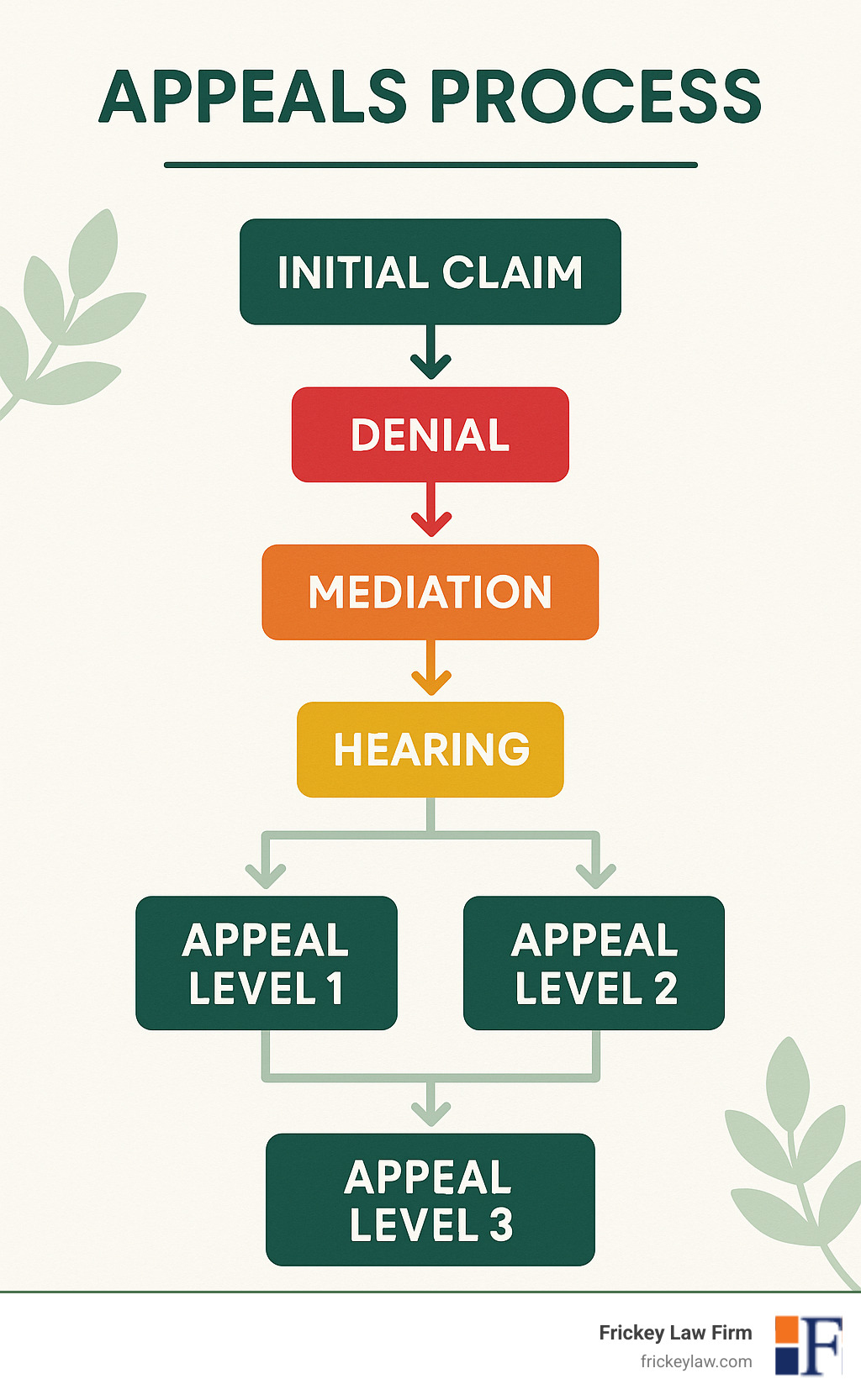
In North Carolina, you’ll need to file Form 33 (Request for Hearing) with the Industrial Commission within two years of the denial. This formal document initiates the appeal process and schedules your case for resolution.
Before reaching a hearing, you’ll typically participate in mandatory mediation. This structured negotiation with a neutral third party often resolves disputes without a formal hearing. Your attorney will prepare compelling arguments and evidence to present during this important opportunity for resolution.
If mediation doesn’t resolve your case, gathering strong evidence becomes critical. Your attorney will collect detailed medical records, expert opinions, witness statements, employment records, and other documentation to build a compelling case for the hearing.
The formal hearing before a Deputy Commissioner functions much like a small trial. Your attorney will present evidence, question witnesses, cross-examine opposing witnesses, and make legal arguments supporting your right to benefits. Your testimony will be crucial, and your attorney will thoroughly prepare you.
After the hearing, you’ll await the Deputy Commissioner’s written decision, which typically arrives within several months. If the decision is favorable, you’ll begin receiving benefits. If not, you have further appeal options.
The appeals process can continue to the Full Commission, the North Carolina Court of Appeals, and potentially the Supreme Court of North Carolina. Each level provides an opportunity to correct errors in previous decisions.
At Frickey Law Firm, we’ve guided countless injured workers through successful appeals, turning initial denials into substantial benefits. The key is persistence, thorough preparation, and experienced representation from a workers compensation attorney near me who knows the North Carolina system inside and out.
Frequently Asked Questions about Local Workers’ Comp Representation
What deadlines apply in my state?
Time is truly of the essence when it comes to workers’ compensation claims in North Carolina. Missing a deadline can mean losing your right to benefits entirely—something I’ve unfortunately seen happen to injured workers who waited too long to take action.
In North Carolina, you need to be aware of these critical deadlines:
30 days is all you have from your injury date to notify your employer. This notification starts the official paper trail of your claim, and while verbal notice is technically acceptable, I always recommend putting it in writing.
2 years from your injury date to file Form 18 with the Industrial Commission. This form makes your claim official in the eyes of the state.
2 years from a denial to request a hearing by filing Form 33. This is essentially your appeal window if your claim gets rejected.
2 years from the last payment of medical compensation to request additional treatment. This is particularly important for injuries that may require ongoing care.
I’ve seen too many valid claims dismissed simply because paperwork wasn’t filed on time. Don’t let bureaucratic deadlines stand between you and the benefits you deserve.
Can I be fired for filing a claim?
The short answer is no—it’s illegal for your employer to fire you simply for filing a workers’ compensation claim. North Carolina law provides clear protections against this kind of retaliation.
That said, the real world can be more complicated. While your employer can’t legally terminate you for filing a claim, they can still let you go for unrelated reasons. For example, if company-wide layoffs occur or if you had documented performance issues before your injury, those could be considered legitimate grounds for termination.
If you suspect you’ve been fired, had your hours reduced, or faced other negative consequences because of your workers’ comp claim, don’t just accept it. You may have grounds for a wrongful termination lawsuit in addition to your workers’ compensation claim.
At the Frickey Law Firm, we take retaliation cases seriously and can help you understand whether your employer’s actions cross the legal line. Many workers feel powerless after an injury—I’m here to tell you that you have rights worth fighting for.
How are attorneys paid?
One of the most common concerns I hear from potential clients is worry about affording legal help. Let me put your mind at ease: you don’t need a penny in your pocket to hire a workers compensation attorney near me.
In North Carolina, workers’ compensation attorneys like myself work on what’s called a contingency fee basis. This means:
We only get paid if you win benefits. If we don’t succeed in getting you compensation, you owe us nothing for our time and effort.
No upfront costs to start your case. Your initial consultation is free, and we cover the costs of building your case.
Fees are regulated by the North Carolina Industrial Commission, typically set at 25% of your recovery. This ensures the fee is fair and proportional to your benefits.
Payment comes directly from your award, so you never receive a bill for attorney time.
This system ensures that quality legal representation is available to everyone, regardless of financial situation. It also aligns our interests perfectly with yours—we only succeed when you do.
At the Frickey Law Firm, we believe that injured workers deserve expert legal help without financial stress. That’s why we’re committed to this no-recovery, no-fee approach. Your focus should be on healing, not worrying about legal bills.
More info about workers’ compensation help
Conclusion
When you’re dealing with a workplace injury, the last thing you need is the added stress of battling an insurance company or trying to understand complex legal paperwork. That’s where having a dedicated workers compensation attorney near me becomes invaluable.
The workers’ compensation journey can feel overwhelming—from reporting deadlines to medical evaluations, from paperwork requirements to benefit calculations. But you don’t have to walk this path alone. A local attorney brings not just legal expertise, but a helping hand when you need it most.
Here in North Carolina, the system has specific requirements and timelines that can make or break your claim. A local attorney understands these nuances and has built relationships with the medical providers, judges, and insurance representatives you’ll encounter throughout your case. This local knowledge often translates to better outcomes and smoother processes.
At the Frickey Law Firm in Raleigh, we see beyond the paperwork to the person behind each case. We understand that your injury affects not just your ability to work, but your family, your financial security, and your peace of mind. Our board-certified expertise has helped countless North Carolina workers secure the care and support they deserve after workplace injuries.
The decision to seek legal help shouldn’t add to your worries. That’s why we offer free initial consultations and work on a contingency basis—you pay nothing unless we win your case. We believe everyone deserves quality representation, regardless of their current financial situation.
Don’t wait until problems arise with your claim. The earlier we can get involved, the better we can protect your interests and guide your case toward a favorable resolution. Your health and financial security are simply too important to leave to chance.
Let us shoulder the legal burden while you focus on what matters most—your recovery. With the Frickey Law Firm by your side, you gain not just an attorney, but an advocate committed to helping you rebuild and move forward after your workplace injury.
More info about workers’ compensation help
